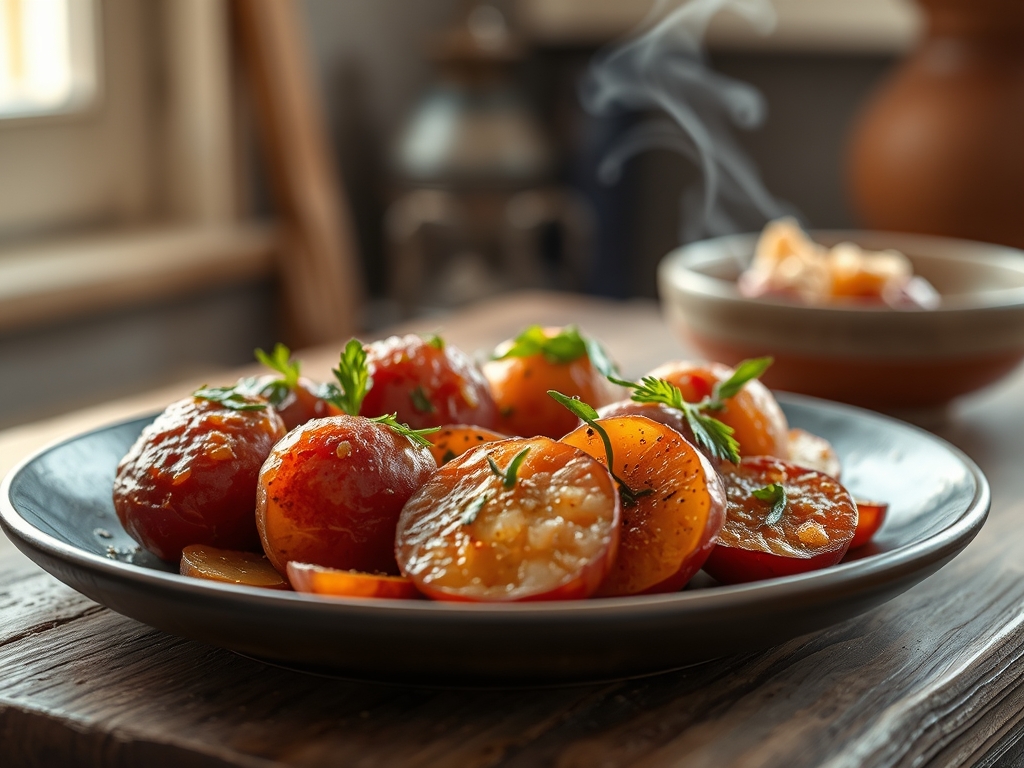
Picture the scene: your kitchen is filled with the intoxicating scent of rosemary and rendered duck fat. There is something deeply primal about a tray of sizzling spuds hitting the counter. When you master large red potato recipes, you are not just cooking; you are performing a delicate dance of moisture evaporation and starch gelatinization.
Red potatoes are the secret weapon of the roasting world. Unlike their starchy Russet cousins, these gems are waxy and high in moisture. This means they hold their structural integrity even under intense heat. You get that elusive contrast between a glass-like outer shell and a creamy, custard-like interior. It is the ultimate comfort food, elevated by a bit of high-heat chemistry and a lot of culinary love.
The Gathers:
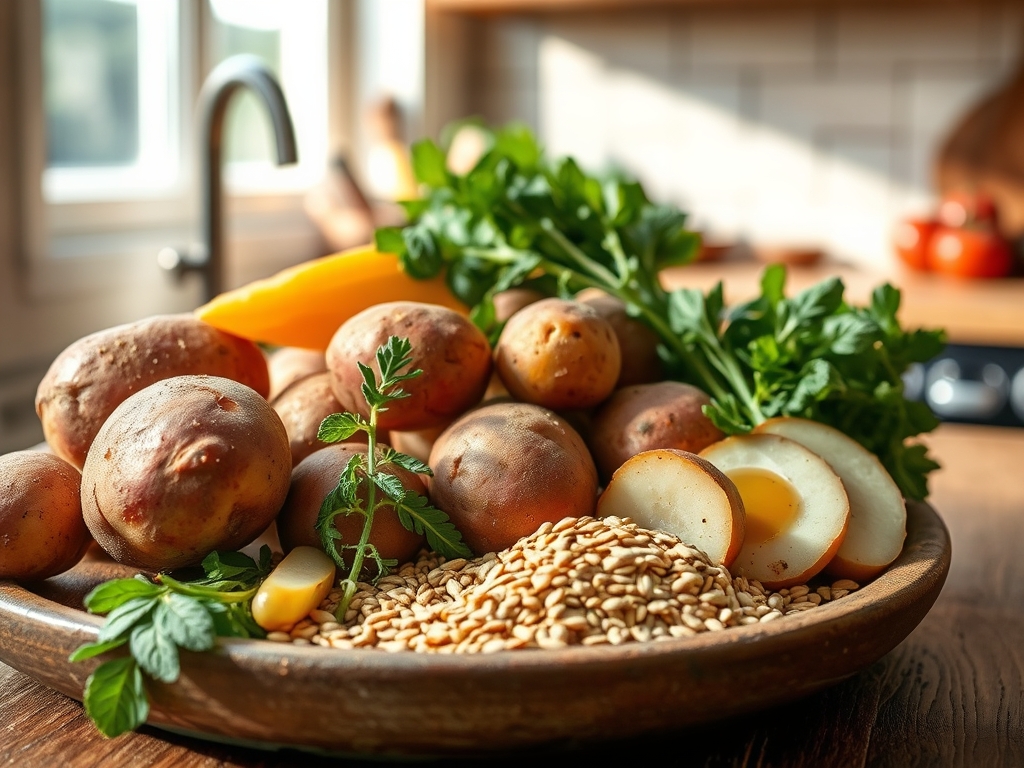
To achieve the perfect roast, your mise-en-place must be precise. Start with five pounds of large red potatoes. Look for skins that are taut and free of soft spots; this indicates a high turgor pressure within the plant cells, which translates to a better snap when bitten. You will need a high-smoke-point fat. While butter tastes divine, its milk solids burn at 350 degrees Fahrenheit. Instead, reach for avocado oil or clarified butter (ghee) to withstand the 425-degree blast of the oven.
For the aromatics, gather fresh rosemary sprigs, thyme, and a whole head of garlic. Use a microplane to zest a lemon for a piquant finish that cuts through the richness. You will also need coarse kosher salt. The jagged edges of the salt crystals act as an abrasive during the tossing phase, roughening up the potato surface to create more surface area for the Maillard reaction.
Smart Substitutions: If you are out of fresh herbs, use a high-quality dried Herbes de Provence, but hydrate them in your oil first to prevent burning. For a vegan twist, swap animal fats for a cold-pressed olive oil infused with garlic. If you want a spicy kick, a teaspoon of smoked paprika adds a deep, earthy red hue and a hint of woodsmoke.
The Clock
Efficiency in the kitchen is all about "Chef's Flow." This recipe requires 15 minutes of active prep and 45 to 50 minutes of roasting time. Total commitment: roughly 65 minutes.
The flow begins with the "Pre-Heat Peak." Set your oven to 425 degrees Fahrenheit before you even touch a knife. While the oven stabilizes, you scrub and chop. The "Mid-Point Shuffle" happens 25 minutes into roasting, where you use tongs to rotate the tray. Finally, the "Resting Phase" is a mandatory five-minute window after pulling the tray. This allows the internal steam to redistribute so the potatoes do not turn into mush when you plate them.
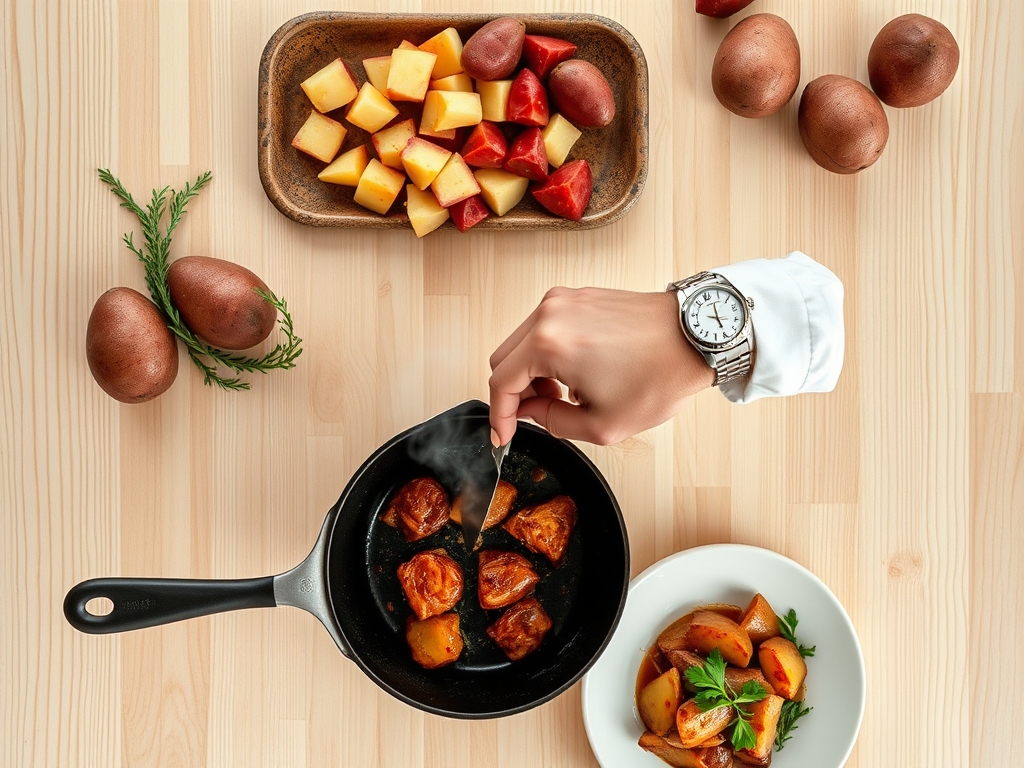
The Masterclass
1. The Precision Cut
Using a sharp chef's knife or a bench scraper to organize your piles, cut your large red potatoes into uniform one-inch cubes. Uniformity is not just for aesthetics; it ensures that every piece finishes cooking at the exact same millisecond.
Pro Tip: This prevents enzymatic browning. When you cut a potato, the polyphenol oxidase reacts with oxygen. If you are not roasting immediately, submerge the cubes in cold water to block oxygen contact and keep the flesh pristine.
2. The Parboil Power Move
Place your cubes in a pot of cold, heavily salted water. Bring to a boil and simmer for only five minutes. You want the edges to be soft, but the center should still be firm. Drain them and let them steam dry in a colander for two minutes.
Pro Tip: This process triggers starch gelatinization. The heat breaks down the intermolecular bonds of starch molecules, allowing them to absorb water and swell. This creates the "fuzzy" exterior that turns into a crunch-fest later.
3. The Rough Up
Transfer the parboiled potatoes back into the pot. Add your fat and salt. Close the lid and give it a vigorous shake. You want to see a thin, viscous layer of mashed potato paste coating each cube.
Pro Tip: This increases the surface area for the Maillard reaction. By creating a starchy slurry on the surface, you provide more amino acids and reducing sugars to brown, resulting in a significantly louder crunch.
4. The High-Heat Blast
Spread the potatoes onto a pre-heated heavy-duty baking sheet. Do not crowd them. If they touch, they will steam instead of roast. You should hear a distinct sizzle the moment they hit the metal.
Pro Tip: This utilizes thermal conductivity. A pre-heated tray transfers energy directly into the potato base via conduction, while the oven air handles convection. This dual-threat heating ensures the bottom is as crispy as the top.
5. The Aromatic Infusion
Ten minutes before the timer ends, toss in your smashed garlic cloves and woody herbs. Use a saucier to melt a tablespoon of butter if you want an extra glossy finish, pouring it over the tray for the final stretch.
Pro Tip: Volatile oils in herbs are heat-sensitive. Adding them too early destroys their delicate flavor compounds. Adding them late allows the fats to infuse with the herbal essence without scorching the leaves.
The Deep Dive
Macro Nutrition: One serving of these roasted red potatoes provides approximately 180 calories, 4 grams of fiber, and more potassium than a banana. They are naturally fat-free until you add the oil, making them a dense source of complex carbohydrates for sustained energy.
Dietary Swaps: For a Keto-friendly version, you must swap the potatoes for cauliflower florets, though the roasting time will drop to 20 minutes. For a Gluten-Free guarantee, ensure your spices are not processed with wheat-based anti-caking agents. Vegan diners should use avocado oil and nutritional yeast for a "cheesy" umami hit.
The Fix-It:
- Soggy Potatoes: Usually caused by overcrowding the pan. Fix: Split the batch onto two trays to allow steam to escape.
- Burnt Garlic: Added too early. Fix: If it happens, pick out the black bits immediately as they turn bitter; next time, leave the skins on the cloves to protect them.
- Sticking to the Pan: You likely used a thin tray or did not use enough fat. Fix: Use a heavy-bottomed skillet or a professional-grade rimmed baking sheet.
Meal Prep: To reheat and maintain "day-one" quality, avoid the microwave. The microwave agitates water molecules, making the starch retrogradation turn the potato gummy. Instead, use an air fryer at 400 degrees for four minutes or a dry skillet to re-crisp the skin.
The Wrap-Up
Mastering large red potato recipes is a rite of passage for any home cook who wants to move from "good" to "gourmet." By understanding the science of starch and the power of the parboil, you turn a humble root vegetable into a golden masterpiece. Go ahead and grab your favorite heavy-bottomed skillet and get roasting. Your dinner guests will thank you, and your kitchen will smell like a five-star bistro.
The Kitchen Table
Why are my red potatoes not getting crispy?
You likely skipped the parboiling step or crowded the pan. Parboiling creates a starchy surface layer that dehydrates into a crisp shell. Give each potato at least an inch of space to ensure moisture can evaporate properly during the roast.
Should I peel red potatoes before roasting?
No, keep the skins on. Red potato skins are incredibly thin and contain the bulk of the vegetable's fiber and nutrients. During roasting, the skin becomes a delicious, papery contrast to the creamy interior, adding both texture and visual appeal.
Can I roast red potatoes at a lower temperature?
You can, but you will lose the "crunch factor." High heat (400-425F) is essential for the Maillard reaction to occur rapidly before the interior overcooks. Lower temperatures often result in a tough, leathery skin rather than a crisp one.
What is the best oil for roasting potatoes?
Choose an oil with a high smoke point like avocado, grapeseed, or clarified butter. These oils stay stable at 425 degrees. Extra virgin olive oil has a lower smoke point and may produce acrid flavors if pushed too hard in the oven.