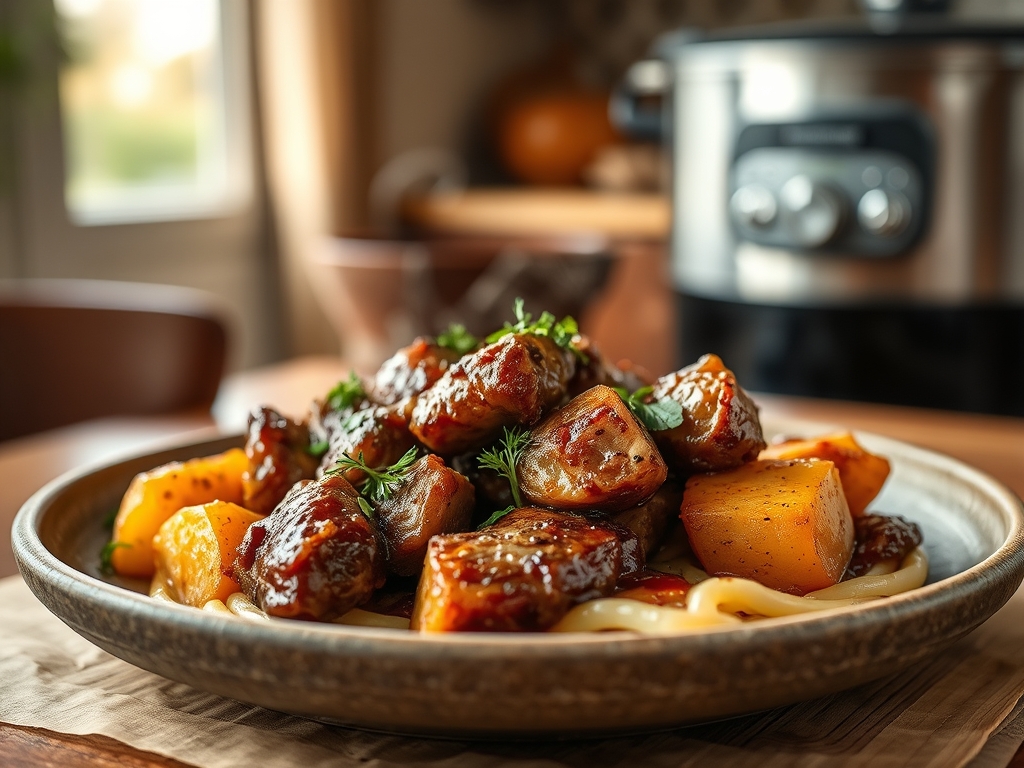
Picture the heavy ceramic lid lifting to release a plume of steam that smells like a warm hug and a five star steakhouse had a baby. There is something fundamentally grounding about slow cooker meat and potato recipes; they are the culinary equivalent of a cashmere blanket. When the weather turns crisp, your soul starts craving that specific combination of fork tender protein and starchy, salt-crusted tubers. We are not just tossing ingredients into a ceramic pot and hoping for the best. We are orchestrating a long, slow dance of molecular transformation. By the time the timer dings, the connective tissue in your roast will have melted into silky gelatin, and your potatoes will have absorbed every drop of seasoned marrow. This is high-level comfort food that works for you while you are busy living your life. We are going to master the art of the slow simmer, ensuring your meat is never stringy and your potatoes never turn to mush. Grab your favorite apron and a glass of wine; we are diving into the science of the ultimate one-pot feast.
The Gathers:
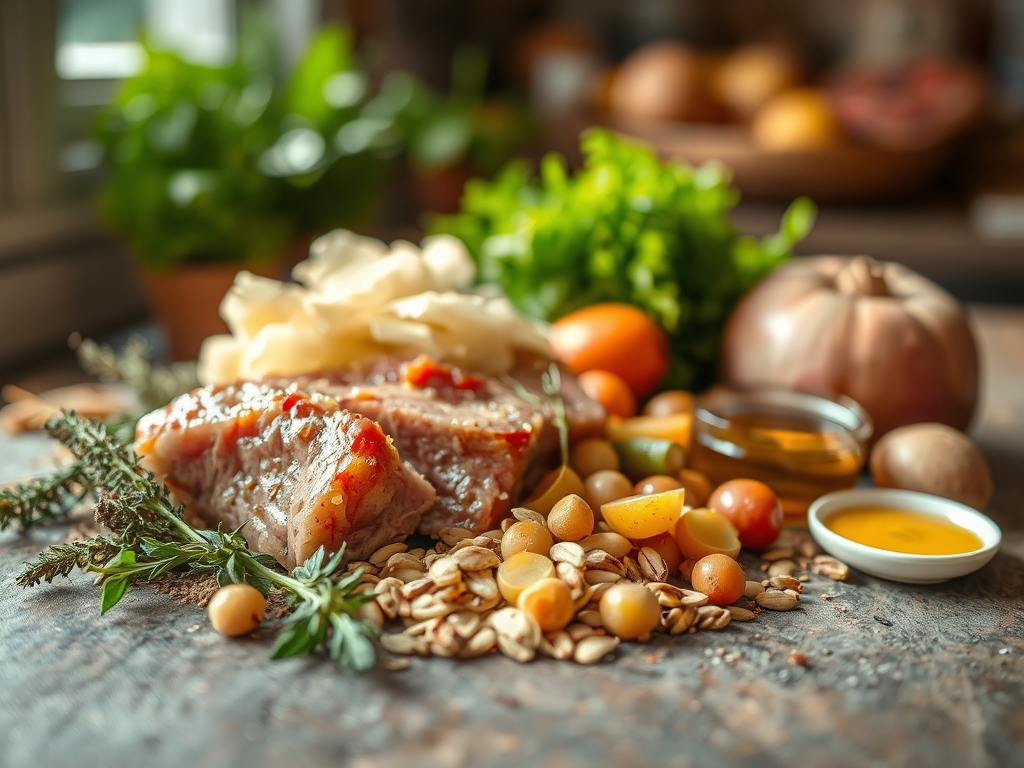
Before we apply heat, we must respect the mise-en-place. For these slow cooker meat and potato recipes, your ingredient selection is the difference between a muddy stew and a masterpiece. You will need a three to four pound cut of beef chuck or pork shoulder. Look for heavy intramuscular marbling; this white lace of fat is what will render over eight hours to keep the fibers moist. For the potatoes, reach for low-moisture varieties like Russets if you want them to break down and thicken the sauce, or waxy Red Bliss potatoes if you want them to hold their structural integrity against the heat.
You will also need a bouquet garni of fresh rosemary and thyme to infuse the liquid with volatile oils. Do not forget the aromatics: yellow onions for sweetness and garlic cloves that we will crush to release allicin. For the liquid base, a rich bone broth or a dry red wine like Cabernet Sauvignon provides the necessary acidity to balance the fats.
Smart Substitutions:
If you are looking to lighten the caloric load, swap the beef for skinless chicken thighs, which handle long cook times better than breasts. For a lower glycemic index, replace half of the potatoes with parsnips or rutabagas. If you find yourself out of fresh herbs, use a third of the amount in dried form, as the dehydration process concentrates the flavor profile.
The Clock:
Efficiency in the kitchen is all about the Chef's Flow. Expect to spend about 20 to 25 minutes on active prep. This includes the crucial step of searing the meat and chopping your root vegetables into uniform three inch chunks to ensure an even cook rate.
The cooking duration is where the magic happens. On the "Low" setting, you are looking at 8 to 10 hours. This extended window allows for the hydrolysis of collagen into gelatin, which occurs most effectively between 160 and 180 degrees Fahrenheit. If you are in a rush, the "High" setting takes 4 to 5 hours, but be warned: the higher temperature can cause the muscle fibers to contract more violently, potentially leading to a slightly tougher texture. Always aim for the long, slow crawl if your schedule allows.
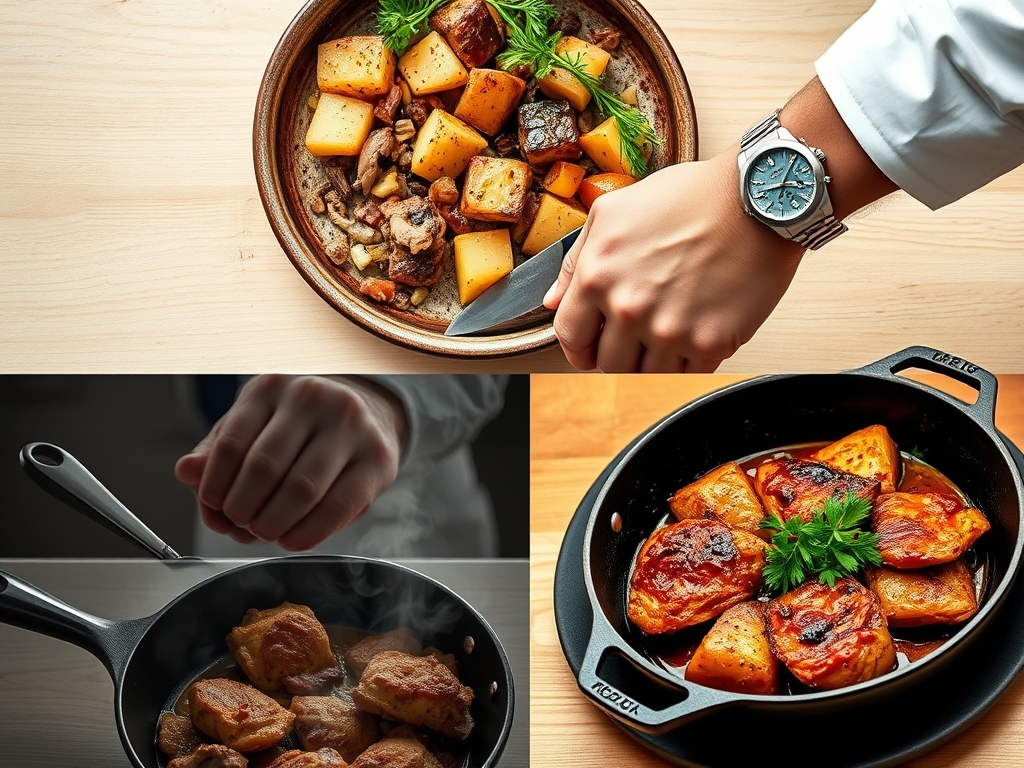
The Masterclass:
1. The Maillard Sear
Pat your meat bone-dry with paper towels and season aggressively with kosher salt. Heat a heavy-bottomed skillet over medium-high heat with a high-smoke-point oil. Use tongs to sear every side of the meat until a deep, mahogany crust forms.
Pro Tip: This is the Maillard Reaction. Creating this crust develops hundreds of different flavor compounds that a slow cooker cannot produce on its own due to the presence of steam.
2. Deglaze the Pan
Once the meat is moved to the slow cooker, pour a splash of broth or wine into the hot skillet. Use a wooden spoon to scrape up the browned bits, or fond, stuck to the bottom.
Pro Tip: Those browned bits are concentrated umami. Deglazing ensures that no flavor is wasted and incorporates those complex sugars back into your braising liquid.
3. Layering the Foundation
Place your aromatics and potatoes at the bottom of the slow cooker insert. Rest the seared meat directly on top of the vegetables. Pour your deglazing liquid and remaining broth over the top until the meat is only halfway submerged.
Pro Tip: Placing the potatoes on the bottom subjects them to the highest heat, ensuring they soften completely while the meat steams gently above them.
4. The Aromatics Infusion
Tuck your herbs and garlic into the liquid around the meat. If you want a viscous sauce, add a tablespoon of tomato paste or a dash of Worcestershire sauce at this stage to deepen the color and mouthfeel.
Pro Tip: Adding acids like vinegar or citrus at the very end is better, but adding tomato paste now allows the sugars to caramelize slightly during the long cook.
5. The Gentle Rest
Once the timer is up, do not shred the meat immediately. Transfer the roast to a cutting board and tent it loosely with foil for 15 minutes.
Pro Tip: This allows for thermal carryover and lets the muscle fibers relax, reabsorbing the juices so they do not spill out onto the board when you slice.
The Deep Dive:
From a macro perspective, these roasts are a powerhouse of protein and complex carbohydrates. A standard serving provides roughly 35 grams of protein and 30 grams of energy-sustaining carbs. To make this Keto-friendly, simply swap the potatoes for cauliflower florets added in the last hour of cooking. For a Vegan twist, use "meaty" Portobello mushrooms and vegetable stock; just reduce the cook time to 4 hours.
The Fix-It:
- Too Salty: Drop in a raw, peeled potato for the last 30 minutes; it acts as a sponge for excess sodium.
- Thin Sauce: Whisk a teaspoon of cornstarch with cold water and stir it in for 15 minutes on "High" to emulsify the fats.
- Tough Meat: It likely hasn't cooked long enough. If it is not "fork-tender," give it another hour. Collagen takes time to melt.
Meal Prep: When reheating, avoid the microwave if possible. Use a saucier on the stovetop over low heat with an extra splash of broth to maintain the day-one moisture levels and prevent the proteins from becoming rubbery.
The Wrap-Up:
Mastering slow cooker meat and potato recipes is like learning a secret language of comfort. You have moved beyond basic "dump dinners" into the realm of technical braising. By honoring the sear, understanding the breakdown of collagen, and respecting the rest period, you are serving a meal that is as sophisticated as it is satisfying. Go ahead and take the credit for the incredible aroma filling your home; your slow cooker was just the tool, but you were the architect.
The Kitchen Table:
Can I put frozen meat in the slow cooker?
No, it is a safety risk. Frozen meat stays in the "danger zone" temperature range for too long, allowing bacteria to multiply. Always thaw your proteins completely in the refrigerator before starting your recipe for optimal food safety.
Why are my potatoes still hard after 8 hours?
Potatoes contain hemicellulose, which stays firm in the presence of acid. If you added wine or vinegar too early, or if your water is particularly hard, the potatoes may struggle to soften. Always place them at the bottom.
How do I prevent the dish from becoming greasy?
Trim excess fat caps from the meat before searing. If the sauce is still too oily, use a wide spoon to skim the surface, or chill the liquid so the fat solidifies for easy removal with a bench scraper.
Do I need to sear the meat first?
While not strictly required for safety, searing is essential for flavor. It creates the Maillard Reaction, which provides the savory depth and rich color that a slow cooker cannot achieve through moist heat alone. Don't skip it!