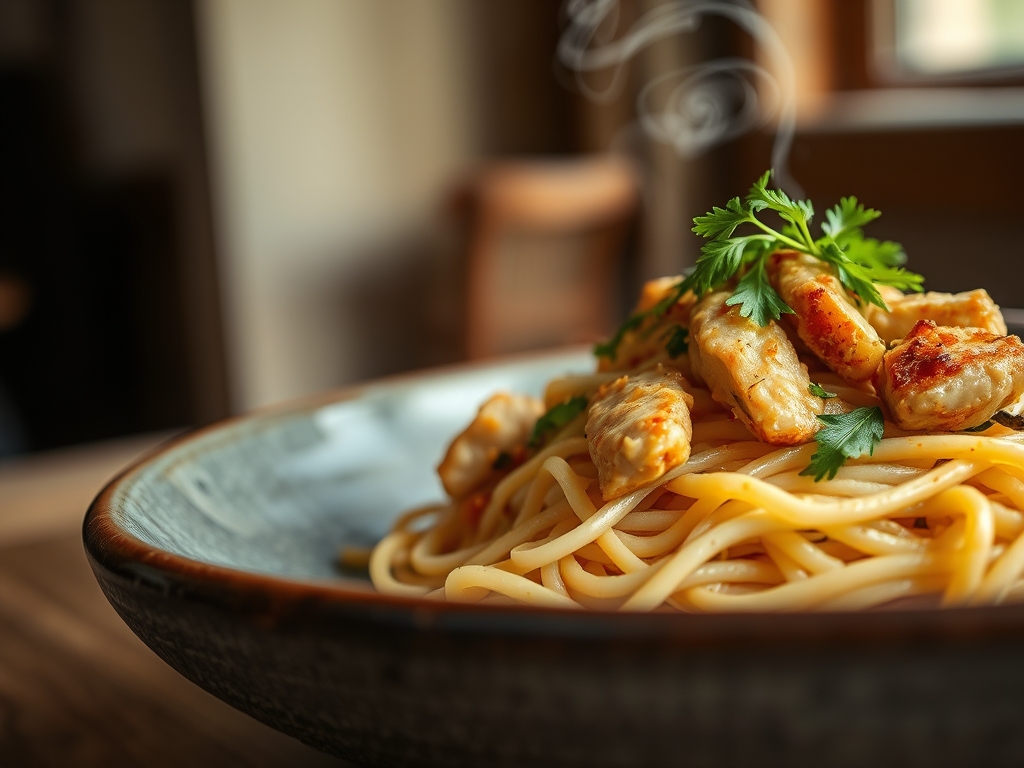
Picture the steam rising from a heavy-bottomed skillet as the fragrance of toasted sesame oil hits the air. This is the sensory magic of rice noodles with chicken recipes; a culinary playground where silky textures meet the savory snap of perfectly seared protein. It is a dish that balances the delicate structural integrity of translucent noodles with the robust, umami-rich depth of poultry.
Getting this right requires more than just following a list of ingredients. It is about understanding the chemistry of the pan. We are looking for that elusive harmony where the sauce becomes a viscous glaze rather than a watery pool. When you master the art of the stir-fry, you are essentially managing heat and moisture to create a symphony of flavor. We are going to dive deep into the mechanics of high-heat searing and starch hydration to ensure your weeknight dinner feels like a high-end bistro experience. Grab your favorite apron and let us get into the science of the sear.
The Gathers:
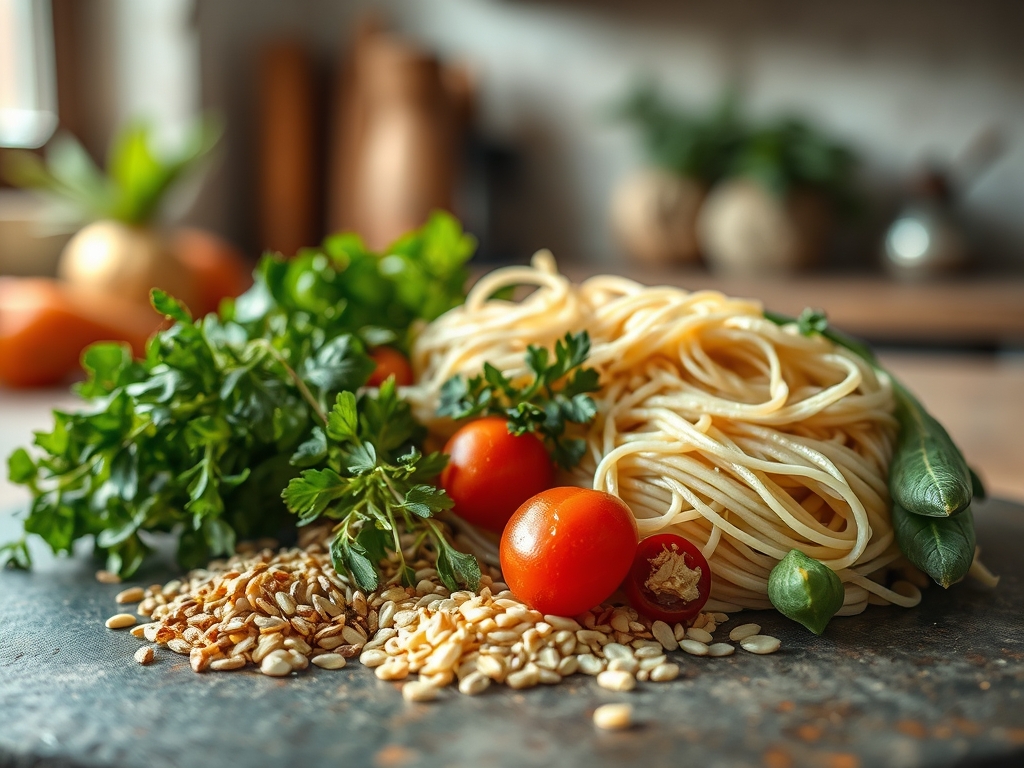
Setting up your mise-en-place is the difference between a frantic kitchen and a fluid cooking experience. Start with your protein. You want chicken thighs for their higher fat content and connective tissue, which render beautifully into a succulent bite. If you prefer breasts, a velveting technique using cornstarch and egg white is non-negotiable to prevent the fibers from toughening under high heat.
Your rice noodles are the structural foundation. Look for "XL" or "Wide" varieties for hearty dishes, or "Vermicelli" for lighter, piquant salads. On your workstation, you should have a digital scale to ensure your ratios are precise. You will also need a microplane for grating fresh ginger and garlic into a fine paste; this increases the surface area for maximum flavor infusion. For the sauce, gather high-quality soy sauce, fish sauce for that fermented funk, and rice vinegar to provide the necessary acidity to cut through the salt.
Smart Substitutions:
If you are out of fish sauce, a dash of Worcestershire or a teaspoon of white miso paste provides a similar savory backbone. No rice vinegar? A squeeze of fresh lime juice offers a bright, citric alternative that elevates the aromatics. For those avoiding soy, coconut aminos offer a slightly sweeter, lower-sodium profile that mimics the depth of traditional shoyu.
The Clock:
Efficiency in the kitchen is all about the "Chef's Flow." Total prep time should clock in at 15 minutes, while the actual cooking process is a sprint of about 10 minutes. The secret is that rice noodles do not actually require boiling; they simply need a 20-minute soak in hot water to reach an al dente state.
While the noodles hydrate, you handle your knife work. Use a sharp chef's knife to slice the chicken against the grain, which shortens the muscle fibers and results in a more tender mouthfeel. By the time your pan is screaming hot, every ingredient should be within arm's reach. This prevents the "boiling" effect that happens when a pan cools down because you were busy chopping vegetables while the meat was already searing.
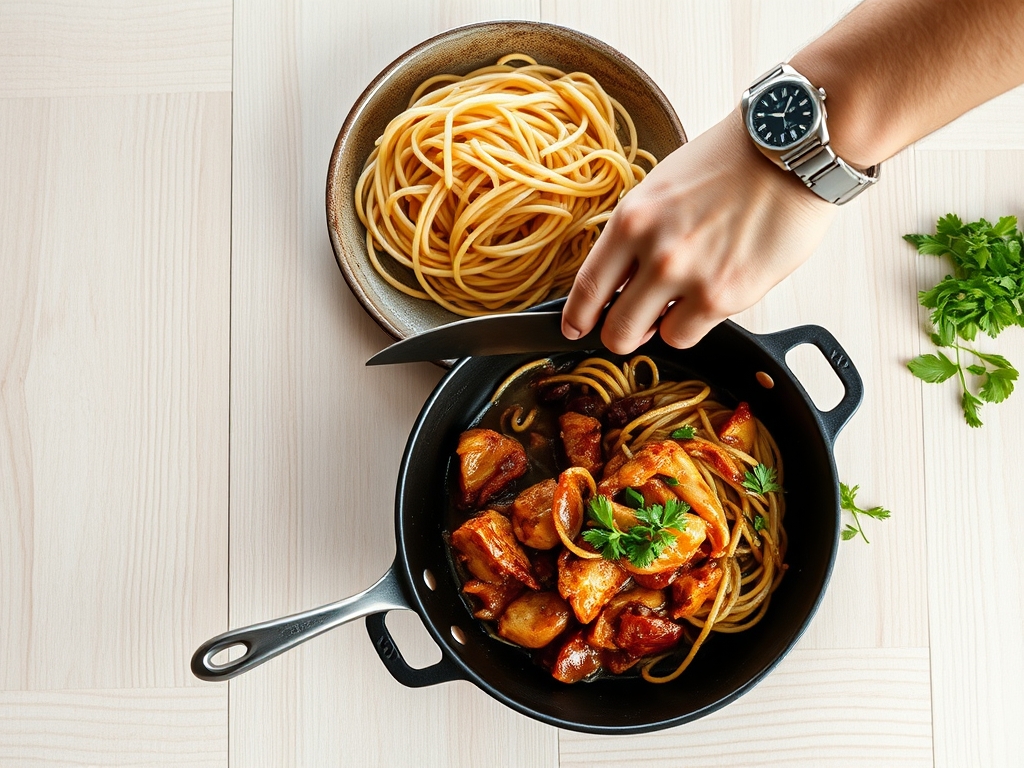
The Masterclass:
1. Hydrate the Foundation
Submerge your rice noodles in a bowl of hot, but not boiling, water. Use a timer to ensure they do not over-soften. You want them flexible but with a distinct "snap" in the center.
Pro Tip: This is about starch retrogradation. By soaking rather than boiling, you preserve the exterior structure of the noodle, preventing them from turning into a gummy mass when they hit the hot sauce in the pan.
2. The High-Heat Sear
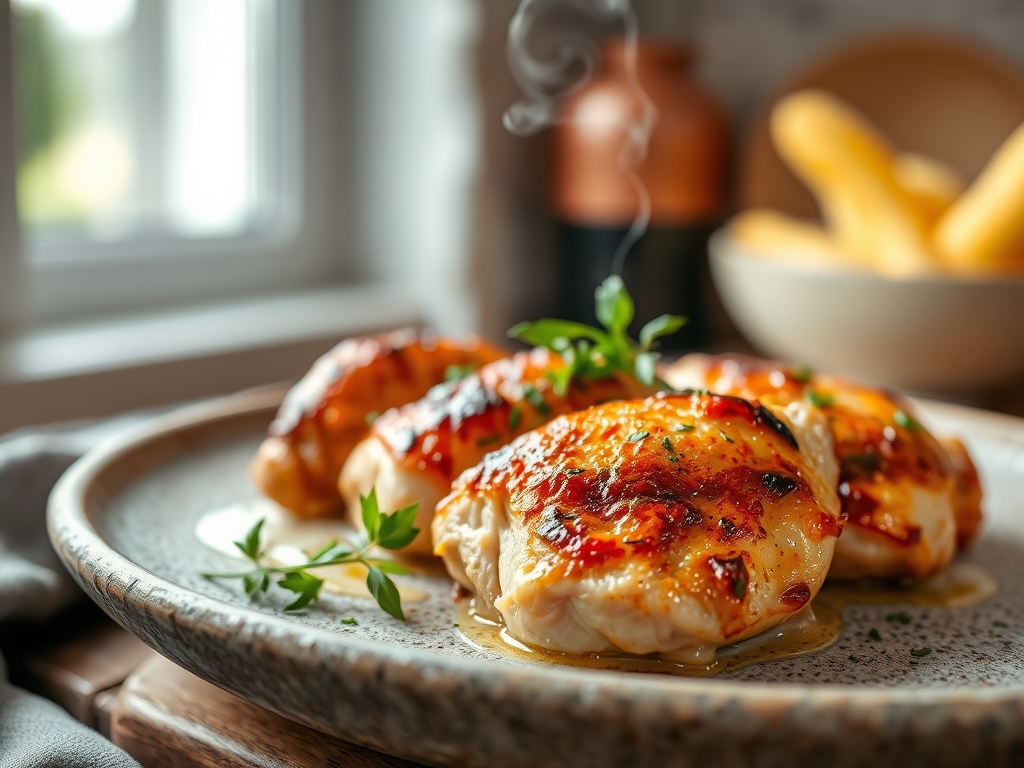
Heat your heavy-bottomed skillet until a drop of water flicked onto the surface dances and evaporates instantly. Add a high-smoke-point oil like grapeseed or peanut oil. Lay the chicken in a single layer and do not touch it for two minutes.
Pro Tip: This facilitates the Maillard Reaction. This chemical reaction between amino acids and reducing sugars creates the brown crust and complex flavors that define a professional-grade sear.
3. Aromatics and Deglazing
Push the chicken to the perimeter of the pan and drop your ginger, garlic, and scallion whites into the center. Stir for thirty seconds until fragrant, then pour in your liquid sauce components. Use a bench scraper or wooden spoon to scrape up the brown bits from the bottom.
Pro Tip: This is deglazing. Those browned bits, known as fond, contain concentrated flavor molecules that dissolve into the sauce, creating a rich, multi-layered profile.
4. The Emulsion Toss
Drain your noodles and add them directly to the skillet. Use tongs to vigorously toss the noodles with the chicken and sauce. The heat will cause the remaining water on the noodles to bind with the fats in the pan.
Pro Tip: You are creating a pan emulsion. The starches leaching from the noodles act as a stabilizer, thickening the sauce until it coats every strand in a glossy, translucent sheen.
The Deep Dive:
From a nutritional standpoint, rice noodles with chicken recipes are a powerhouse of lean protein and complex carbohydrates. A standard serving provides roughly 35 grams of protein and 45 grams of carbs, making it an ideal post-workout recovery meal. To keep the glycemic index lower, load up on fibrous vegetables like bok choy or snap peas.
Dietary Swaps:
For a Vegan version, swap the chicken for extra-firm tofu that has been pressed to remove moisture. Use a "no-fish" sauce made from seaweed and dried mushrooms. For Keto enthusiasts, replace rice noodles with shirataki noodles or spiralized zucchini. These options maintain the "slurp" factor while keeping net carbs near zero.
The Fix-It:
- Gummy Noodles: If your noodles are clumping, you likely overcooked them during the soak. Rinse them in cold water immediately to stop the starch from gelatinizing further.
- Dry Chicken: This usually happens due to thermal carryover. Remove the chicken from the pan when it hits 160 degrees Fahrenheit; it will reach the safe 165 degrees while resting.
- Bland Sauce: If the dish tastes "flat," it needs acid. A splash of lime juice or rice vinegar will brighten the flavors and balance the heavy fats.
Meal Prep Science:
To reheat without losing texture, avoid the microwave if possible. Instead, use a saucier over medium heat with a tablespoon of water. The steam will re-hydrate the starches without making the noodles mushy, restoring that "day-one" silkiness.
The Wrap-Up:
Mastering rice noodles with chicken recipes is your ticket to becoming the hero of your own kitchen. It is a dish that demands respect for the flame and an understanding of how simple ingredients transform under pressure. Once you get the hang of the sear and the soak, you can iterate with endless flavor profiles from spicy sriracha-honey to cooling lime-cilantro. Cooking is a science, but eating is an art. Now go forth, get that pan smoking, and create something absolutely delicious.
The Kitchen Table:
How do I stop rice noodles from sticking together?
Rinse the soaked noodles in cold water to remove excess surface starch. Then, toss them with a teaspoon of neutral oil before adding them to the pan. This creates a physical barrier that prevents clumping during the stir-fry process.
Can I use frozen chicken for this recipe?
Yes, but you must thaw it completely and pat it dry with paper towels. Excess moisture on the surface of the chicken will cause it to steam rather than sear, preventing the Maillard reaction and resulting in a rubbery texture.
What is the best oil for stir-frying chicken?
Use oils with a high smoke point, such as peanut, canola, or grapeseed oil. Avoid extra virgin olive oil or butter, as they will burn and become bitter at the high temperatures required for a proper sear.
How long do leftover rice noodles last?
Leftovers stay fresh in an airtight container for up to three days. When reheating, add a splash of water or broth to help loosen the noodles and prevent them from breaking apart as they warm up.