Imagine the sizzle of a heavy-bottomed skillet meeting cold protein. The kitchen fills with the scent of caramelized sugars and sea salt as you master these six fish and sweet potato recipes. We are bridging the gap between coastal freshness and earthy, root-vegetable depth. It is a culinary marriage of texture and temperature that feels like a luxury resort dinner.
The beauty of fish and sweet potato recipes lies in the chemical contrast. You have the lean, flaky structure of the sea paired with the dense, starchy comfort of the earth. When we talk about these pairings, we are not just making dinner; we are balancing pH levels, managing moisture migration, and playing with the Maillard reaction to create deep, umami-rich crusts. Whether you are searing scallops over a vibrant orange puree or roasting a whole snapper with jewel-toned wedges, the goal is a harmonious plate that satisfies your palate and your nutritional macros. Let us dive into the mechanics of the perfect sear and the science of the starch.
The Gathers:
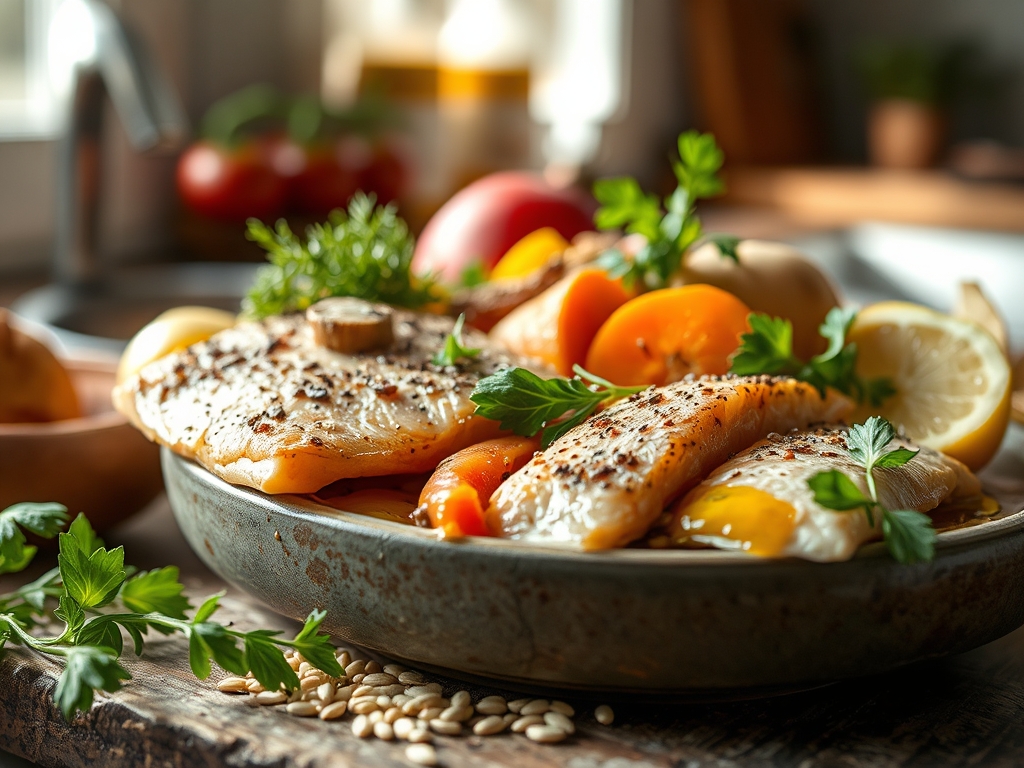
To execute these fish and sweet potato recipes with precision, your mise-en-place must be flawless. We are looking for high-quality lipids and vibrant aromatics. Start with your protein: look for clear eyes and a firm texture in your white fish, or deep pigmentation in your salmon. For the tubers, choose Garnet or Jewel varieties for their high sugar content and moist flesh.
The Essential Kit:
- The Protein: 6-ounce fillets of Halibut, Cod, Salmon, or Sea Bass.
- The Tubers: Organic sweet potatoes, cleaned and skin-on for maximum fiber.
- The Lipids: Ghee or avocado oil for high-smoke point searing; grass-fed butter for finishing.
- The Aromatics: Fresh ginger, garlic, and shallots to provide a piquant base.
- The Acid: Meyer lemons or yuzu juice to brighten the viscous fats.
Smart Substitutions:
If you cannot find fresh Halibut, a thick-cut Mahi-Mahi offers a similar structural integrity during high-heat cooking. For those avoiding nightshades, Japanese Yams provide a starchier, chestnut-like flavor that mimics the texture of a traditional sweet potato without the same glycemic impact. If you lack a microplane for your citrus zest, a very sharp paring knife can create fine slivers, though you must be careful to avoid the bitter white pith.
The Clock: Mastering the Chef's Flow
Timing is the invisible ingredient in every professional kitchen. For these fish and sweet potato recipes, the "Chef's Flow" dictates that the starch always starts first. Sweet potatoes require a longer duration to allow for enzymatic browning and the breakdown of complex starches into maltose.
- Prep Phase (15 Minutes): This is where you use your bench scraper to organize your aromatics and pat your fish bone-dry. Moisture is the enemy of the sear.
- The Starch Lead (25-35 Minutes): Whether roasting wedges or simmering cubes for a puree, the potatoes need a head start.
- The Protein Finish (6-10 Minutes): Fish is delicate. It requires a fast, high-heat intervention or a gentle, low-temperature poach.
- The Rest (3 Minutes): Essential for moisture redistribution within the protein fibers.
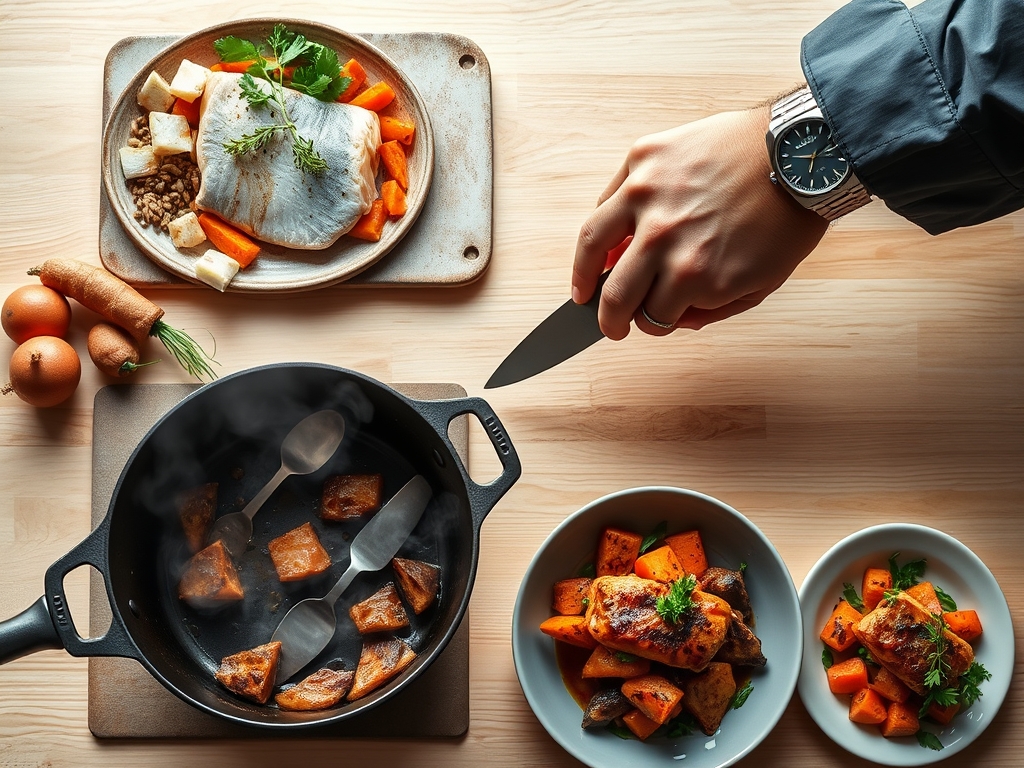
The Masterclass: Six Steps to Perfection
1. The Foundation Roast
Begin by cubing your sweet potatoes into uniform 1-inch pieces using a sharp chef's knife. Toss them in a bowl with high-smoke point oil and sea salt. Spread them on a preheated sheet pan to ensure immediate heat transfer.
Pro Tip: This technique utilizes conductive heat. By preheating the pan, you trigger an immediate sear on the potato surface, preventing the interior from becoming mushy before the outside crisps.
2. The Protein Preparation
While the potatoes roast, prepare your fish. Use a digital scale to ensure even portioning. Pat the skin side with a paper towel until it is tacky to the touch. Season only right before the fish hits the pan to prevent the salt from drawing out moisture prematurely.
Pro Tip: This prevents osmotic pressure from pulling juices to the surface, which would otherwise steam the fish instead of searing it.
3. The Searing Phase
Heat a heavy-bottomed skillet until the oil shimmers. Place the fish skin-side down. Use a flexible fish spatula to apply light pressure for the first 30 seconds. This prevents the protein fibers from curling as they contract.
Pro Tip: This stage relies on the Maillard reaction, a chemical reaction between amino acids and reducing sugars that creates the savory "browned" flavor profile.
4. The Aromatic Infusion
Once you flip the fish, add a knob of butter, crushed garlic, and thyme to the pan. Use a large spoon to baste the hot, flavored fat over the fish. This adds a layer of richness and ensures the top stays moist.
Pro Tip: This is called arroser. The butter acts as a thermal bridge, finishing the cooking process gently while adding a nutty, toasted aroma.
5. The Puree Emulsification
If your recipe calls for a mash, pass the cooked sweet potatoes through a ricer into a saucier. Incorporate cold butter and a splash of coconut milk or cream. Whisk vigorously to aerate the mixture.
Pro Tip: Using a ricer prevents the release of excess starch, which can make the puree gluey. Aeration creates a light, velvety mouthfeel.
6. The Acidic Brightening
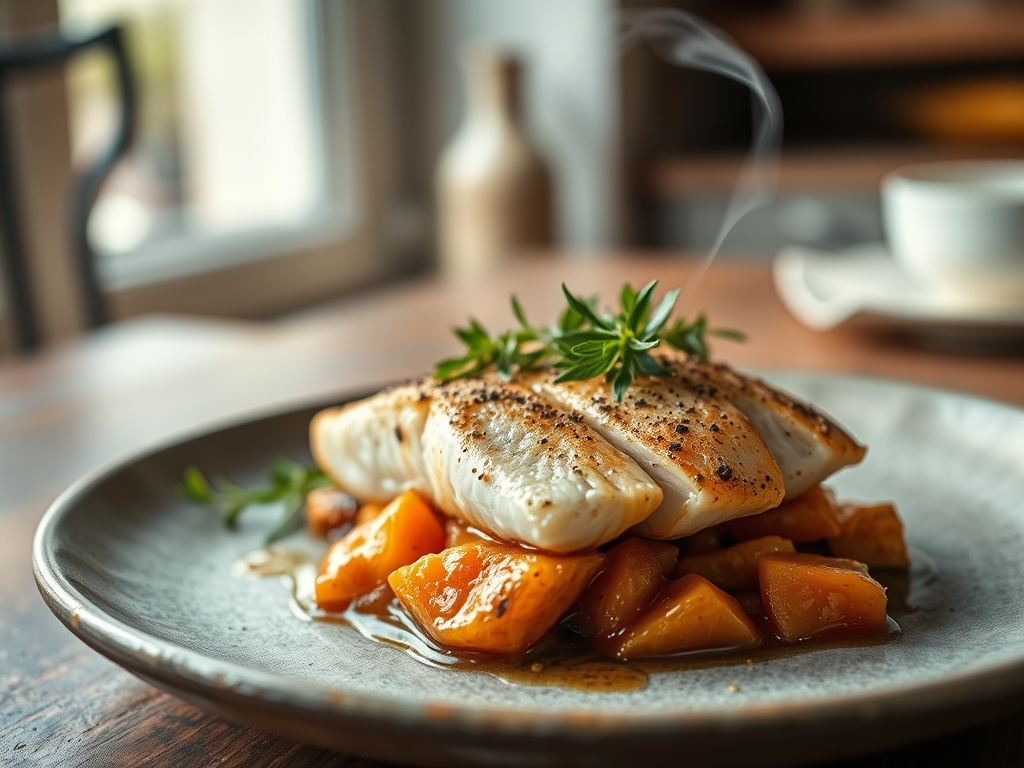
Plate the fish over the sweet potato base. Finish the dish with a spray of fresh lemon juice or a drizzle of herb-infused oil. The acidity cuts through the dense starch and fatty fish.
Pro Tip: Acid balances the pH of the dish, acting as a flavor enhancer that makes the other ingredients "pop" on your taste buds.
The Deep Dive
Macro Nutrition
These fish and sweet potato recipes are a powerhouse of nutrition. You are getting high-quality lean protein and Omega-3 fatty acids from the fish, paired with the complex carbohydrates and Vitamin A found in sweet potatoes. On average, a serving provides 35g of protein, 8g of fiber, and healthy fats that support brain function and skin health.
Dietary Swaps
- Vegan: Replace the fish with a thick "steak" of roasted cauliflower or lion's mane mushroom. Use miso-tahini dressing for the umami hit.
- Keto: Sweet potatoes are high in carbs; swap them for roasted daikon radish or mashed cauliflower with extra grass-fed butter.
- Gluten-Free: This pairing is naturally gluten-free. Just ensure your spices and sauces (like tamari instead of soy sauce) are certified.
The Fix-It: Common Pitfalls
- Soggy Skin: This happens when the pan isn't hot enough or the fish is too wet. The Fix: Use a hair dryer on the skin for 60 seconds before cooking to ensure total dehydration.
- Rubbery Fish: This is a result of overcooking. The Fix: Use a digital thermometer; pull the fish at 130 degrees Fahrenheit for carryover cooking to reach a perfect 135.
- Bland Potatoes: Sweet potatoes need more salt than you think. The Fix: Season in layers; salt before roasting and finish with a pinch of flaky Maldon salt.
Meal Prep: Reheating Science
To maintain "day-one" quality, never microwave fish. The rapid vibration of water molecules toughens the protein. Instead, reheat in a 300-degree oven covered with foil to retain moisture. For the sweet potatoes, a quick toss in a dry skillet will revive the crisp edges.
The Wrap-Up
Mastering fish and sweet potato recipes is about understanding the delicate dance between land and sea. By focusing on thermal control and moisture management, you elevate a simple weeknight meal into a gourmet experience. Remember to trust your senses: listen for the sizzle, watch for the flake, and always taste as you go. You have the tools and the science; now go create something delicious!
The Kitchen Table
Which fish works best with sweet potatoes?
Firm white fish like Halibut or Cod are ideal because their mild flavor doesn't compete with the sweetness of the potato. Fatty fish like Salmon also work beautifully, as the acidity in the potato preparation cuts through the rich oils.
How do I stop fish from sticking to the pan?
Ensure your pan is "ripping hot" before adding oil. Once the oil shimmers, add the fish and do not move it for at least two minutes. The protein will naturally release from the surface once a proper crust has formed.
Can I cook the fish and potatoes on one tray?
Yes, but you must stagger them. Start the sweet potatoes first since they take 25 minutes. Add the fish to the same tray for the final 8 to 10 minutes to ensure everything finishes at the same time without overcooking.
Should I peel the sweet potatoes?
It is a matter of preference, but keeping the skin on adds a rustic texture and boosts the fiber content. If you are making a silky puree, peeling is necessary to achieve a perfectly smooth, professional emulsification.