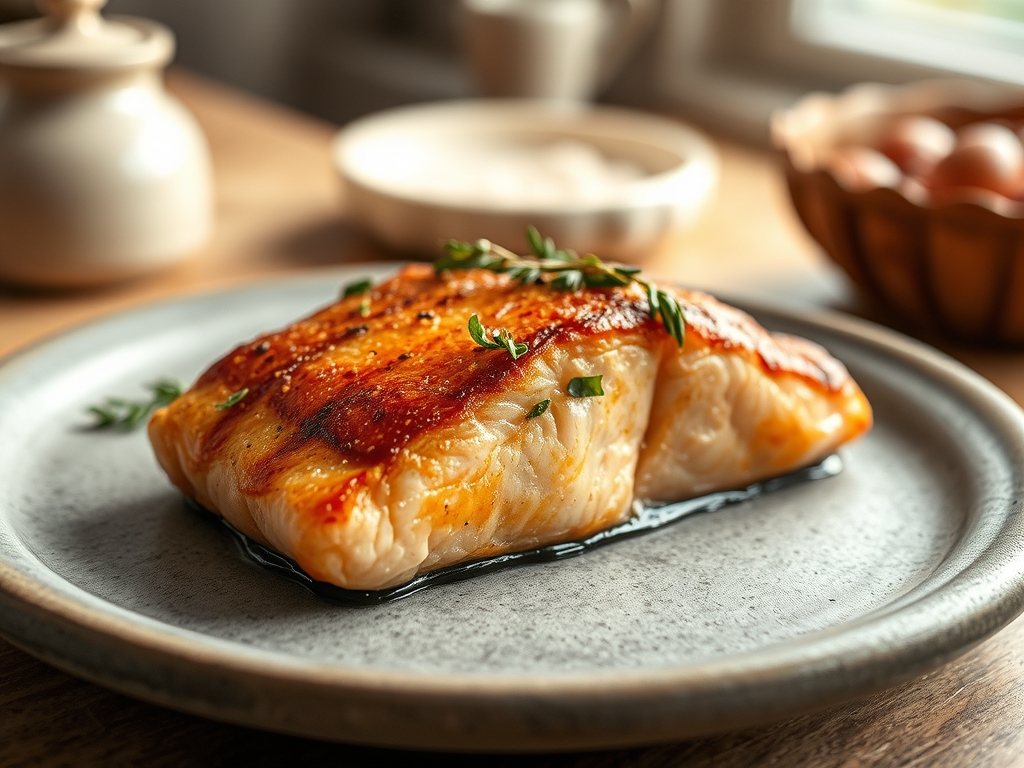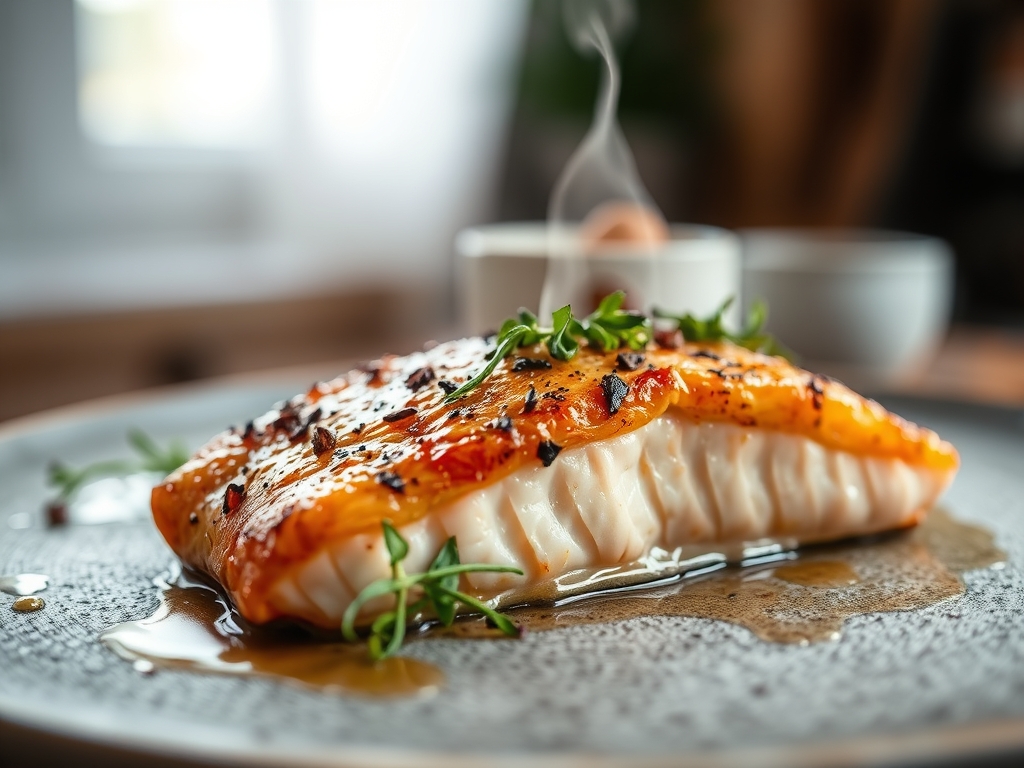
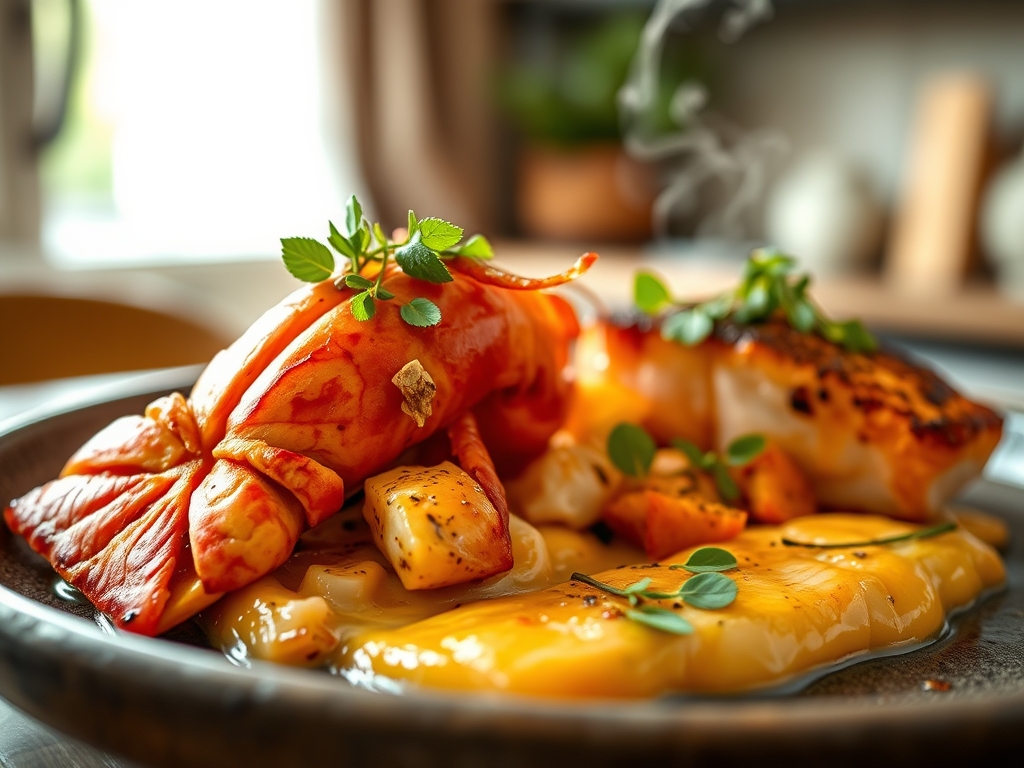
Imagine the sharp, salty snap of cold Atlantic brine meeting the buttery, velvet-like richness of a perfectly seared fillet. When you master lobster and salmon recipes, you are not just cooking; you are orchestrating a high-stakes romance between the king of crustaceans and the queen of the river. This duo represents the pinnacle of surf-and-surf luxury, offering a contrast in textures that ranges from the fibrous, sweet snap of lobster claw to the fatty, flake-apart tenderness of King salmon. Whether you are stuffing a sockeye fillet with a tarragon-infused lobster mousse or stacking grilled tails atop a bed of pan-seared medallions, the goal is a harmonious balance of lipids and proteins. We are diving deep into the molecular mechanics of these oceanic giants to ensure your kitchen smells like a Michelin-starred bistro rather than a pier. Grab your apron; we are about to turn your stovetop into a laboratory of flavor where every sear is calculated and every butter-poach is a lesson in thermodynamics.
The Gathers:
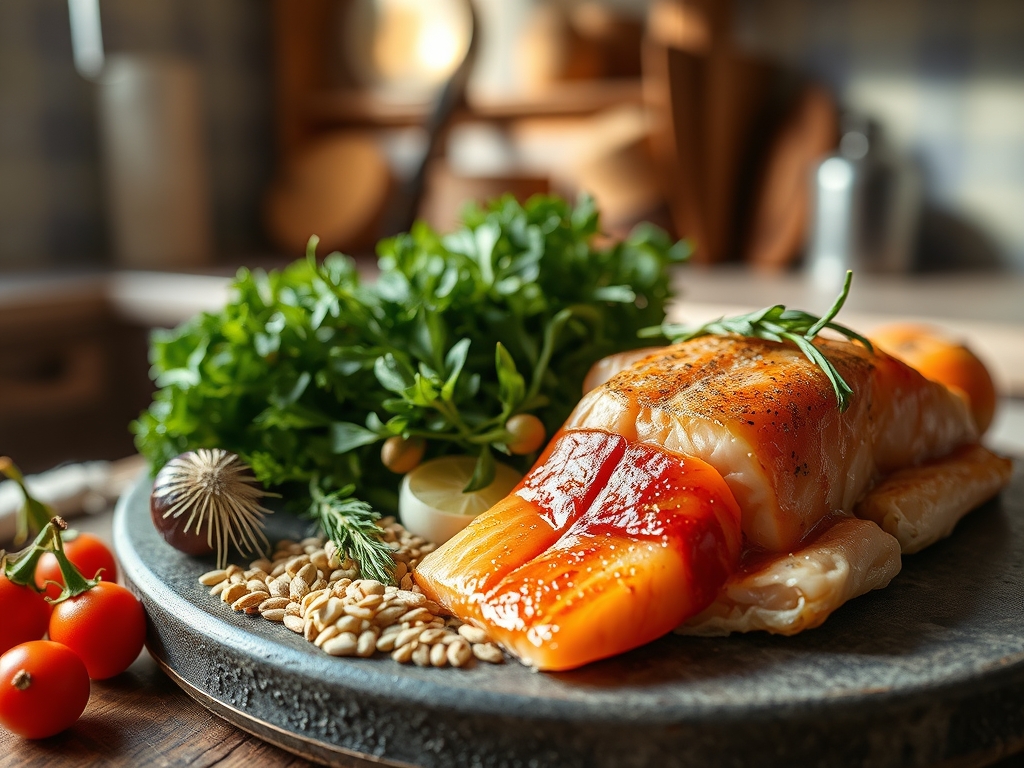
To execute world-class lobster and salmon recipes, your mise-en-place must be clinical in its precision. Start with your proteins. You want cold-water lobster tails, which possess a firmer muscle structure and higher sugar content than warm-water varieties. For the salmon, look for heavy marbling; the intramuscular fat, or "white stripes," will render during cooking to provide a built-in sauce. You will also need unsalted European-style butter, which has a lower water content and higher milk fat percentage, allowing for a more viscous emulsification.
Gather your aromatics: fresh tarragon, chives, and Meyer lemons. The tarragon contains estragole, a compound that mimics the sweetness of the lobster meat. Your professional toolkit should include a heavy-bottomed skillet for heat retention, a microplane for zesting, and a digital scale to ensure your portions are uniform. If you cannot find fresh lobster, a high-quality frozen claw meat is a smart substitution; just ensure it is thawed slowly in the refrigerator to prevent "drip loss," which is the leaking of cellular fluids that leaves meat rubbery. For a keto-friendly swap, replace any binding breadcrumbs with crushed pork rinds or almond flour to maintain that essential structural integrity without the glycemic load.
The Clock: Chef's Flow
Timing is the invisible ingredient that separates a home cook from a professional. The "Chef's Flow" for these recipes dictates that you prepare your lobster first. Because lobster meat is dense, it can withstand a gentle hold in a warm saucier filled with butter. The salmon, however, is a "minute-of" protein. It requires high heat and immediate service to prevent the albumin (that white protein liquid) from weeping out of the flesh.
Expect about 20 minutes of active prep, involving the deveining of tails and the pin-boning of the salmon fillets using specialized fish tweezers. The actual cooking time is remarkably swift; usually under 12 minutes. By utilizing a digital thermometer, you eliminate guesswork. Aim to pull the salmon at 125 degrees Fahrenheit and the lobster at 135 degrees Fahrenheit. The thermal carryover will bring both to their perfect final temperatures while they rest on your bench scraper or cutting board.
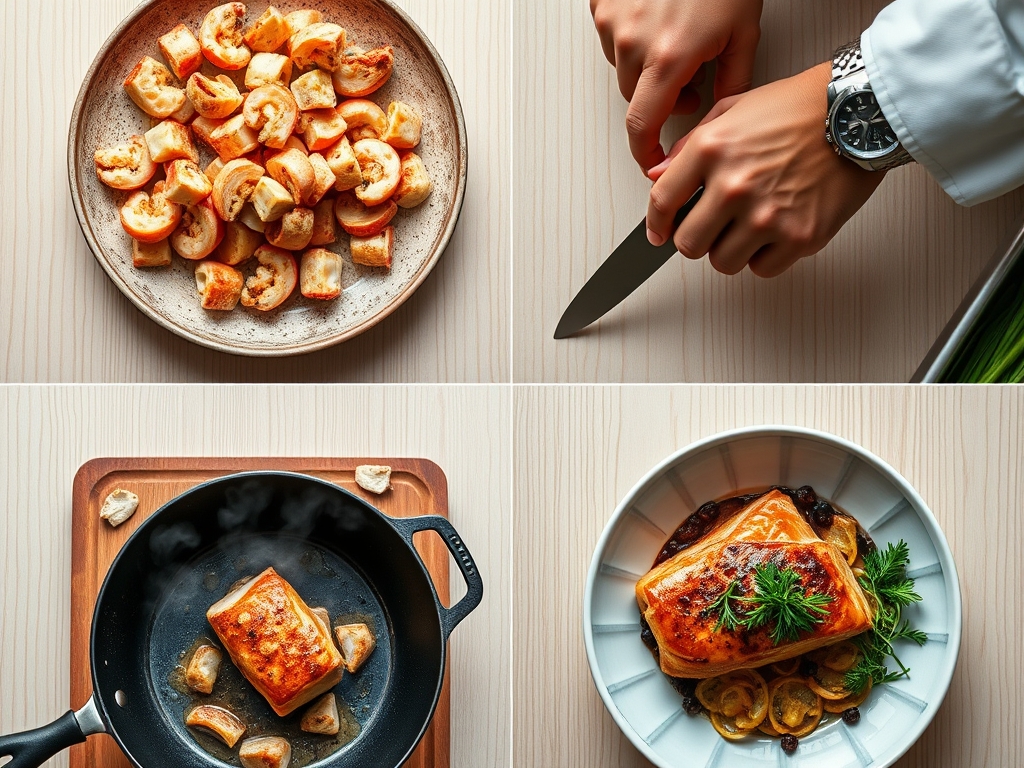
The Masterclass:
1. The Precision Sear
Place your salmon skin-side down in a smoking-hot heavy-bottomed skillet with a high-smoke-point oil like avocado oil. Press down firmly with a flexible fish spatula for the first 30 seconds to prevent the skin from curling. Pro Tip: This physical pressure ensures maximum surface contact, accelerating the Maillard reaction and creating a shatteringly crisp skin that protects the delicate flesh from overcooking.
2. The Butter Poach
In a small saucier, melt your butter with a splash of water to create a stable emulsion. Submerge the lobster meat and keep the temperature between 160 and 180 degrees Fahrenheit. Pro Tip: This technique, known as beurre monte, prevents the lobster proteins from tightening too quickly, resulting in a texture that is tender rather than "snappy" or rubbery.
3. The Deglaze and Infuse
Once the proteins are removed, toss a minced shallot into the pan drippings. Use a dry white wine to deglaze, scraping up the brown bits (the fond). Pro Tip: The alcohol in the wine acts as a solvent, capturing fat-soluble flavor molecules that water-based liquids miss, effectively intensifying the piquant profile of your sauce.
4. The Final Aeration
Whisk in cold butter cubes and a squeeze of lemon juice at the very end, off the heat. Pro Tip: This is called monter au beurre. The cold butter allows the fat to suspend in the liquid without breaking, creating a glossy, viscous sauce that coats the back of a spoon perfectly.
The Deep Dive:
When we look at the macro nutrition of lobster and salmon recipes, we are looking at a powerhouse of Omega-3 fatty acids and high-density lipoproteins. Salmon provides the healthy fats, while lobster offers a lean, mineral-rich protein source high in selenium and B12. For those with dietary restrictions, these recipes are naturally gluten-free if you avoid flour-based thickeners. To make it vegan, you can mimic the textures using heart of palm for lobster and marinated "lox-style" carrots, though the chemical profile will obviously shift.
The Fix-It: Technical Troubleshooting
- The Salmon is Sticking: This usually happens because the pan wasn't hot enough or you tried to flip it too early. The fish will naturally release from the metal once the proteins have fully denatured and browned.
- The Lobster is Tough: You likely boiled it. High-heat boiling causes muscle fibers to contract violently. Switch to a low-temperature poach or steam to keep the fibers relaxed.
- The Sauce is Broken: If your butter sauce looks oily and separated, whisk in a teaspoon of heavy cream or a splash of hot water. The proteins in the cream act as an emulsifier to pull the fat and water back together.
Meal Prep and Reheating:
Reheating seafood is a delicate science. To maintain "day-one" quality, avoid the microwave at all costs; it vibrates water molecules too fast, toughening the protein. Instead, place leftovers in a shallow dish with a tablespoon of water or broth, cover tightly with foil, and warm in a 275-degree oven. This creates a mini-steam chamber that gently rehydrates the fibers without re-cooking them.
The Wrap-Up:
You are now armed with the molecular secrets to making lobster and salmon recipes that would make a salty sea captain weep with joy. By focusing on temperature control, fat emulsification, and the science of the sear, you have elevated a simple dinner into a technical masterpiece. Remember, the kitchen is your playground and the ingredients are your medium. Don't be afraid to let that butter brown slightly for a nutty aroma or to use your microplane to shower the final dish in citrus zest. Now, go forth, grab those tongs, and show that seafood who is boss!
The Kitchen Table:
How do I tell if my salmon is cooked without cutting it?
Use a cake tester or a thin metal skewer. Insert it into the thickest part of the fish for three seconds, then touch it to your bottom lip. If it feels warm but not hot, your salmon is a perfect medium-rare.
Can I use frozen lobster for these recipes?
Yes, but thaw it slowly in the refrigerator for 24 hours. Pat the meat extremely dry with paper towels before cooking. Excess moisture creates steam, which prevents the Maillard reaction and leads to a mushy, boiled texture rather than a sear.
What is the best way to butterfly a lobster tail?
Use heavy-duty kitchen shears to snip down the center of the top shell. Stop just before the tail fin. Use your fingers to gently pry the meat upward, resting it on top of the shell for a "piggyback" presentation.
Why does my salmon have white stuff on it?
That white substance is albumin, a protein that pushes to the surface when the muscle fibers contract too quickly. To minimize this, cook the fish at a slightly lower temperature or brine it briefly in salt water before searing.