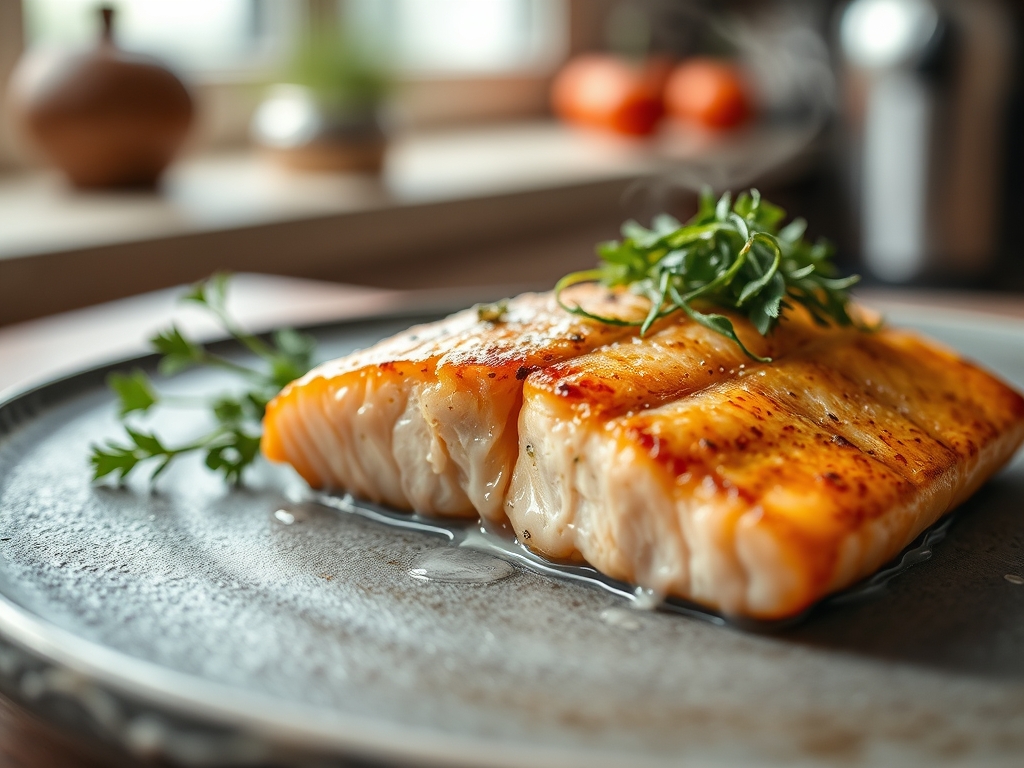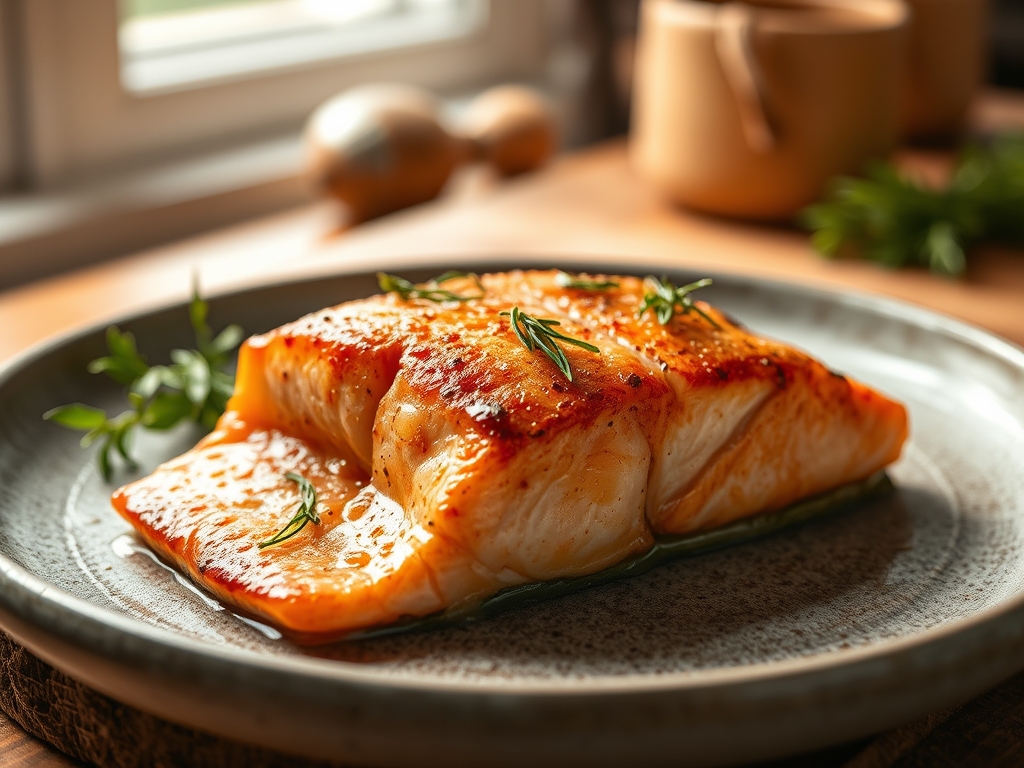
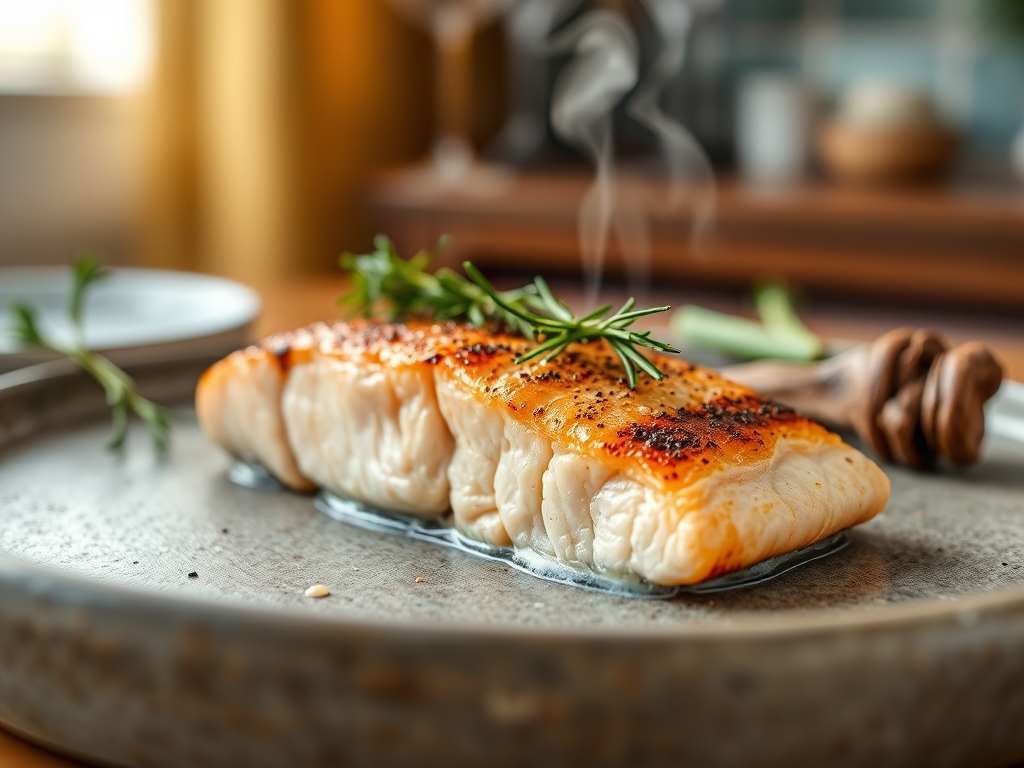
Picture a heavy, cast iron platter hitting the center of a mahogany table, its surface shimmering under the amber glow of holiday candles. The air carries the scent of toasted pine nuts and charred citrus. When selecting salmon recipes for christmas dinner, you are not just choosing a main course; you are engineering a sensory masterpiece that balances fatty richness with festive acidity. This is the ultimate culinary pivot from the traditional, often dry, roast turkey. Salmon offers a luxurious, buttery mouthfeel that pairs exquisitely with the crisp winter air and the effervescence of a chilled glass of Blanc de Blancs.
The beauty of a whole side of salmon lies in its structural integrity and its ability to act as a canvas for complex flavor profiles. Whether you are aiming for a deep, molasses-based glaze or a bright, herb-crusted finish, the goal is the same: achieving that perfect medium-rare center while the exterior undergoes a glorious Maillard transformation. We are moving beyond the basic weekday fillet. Today, we are focusing on six elegant variations, from a pomegranate-glazed centerpiece to a salt-crusted marvel that locks in every ounce of moisture. Let us dive into the mechanics of the perfect holiday roast.
The Gathers:
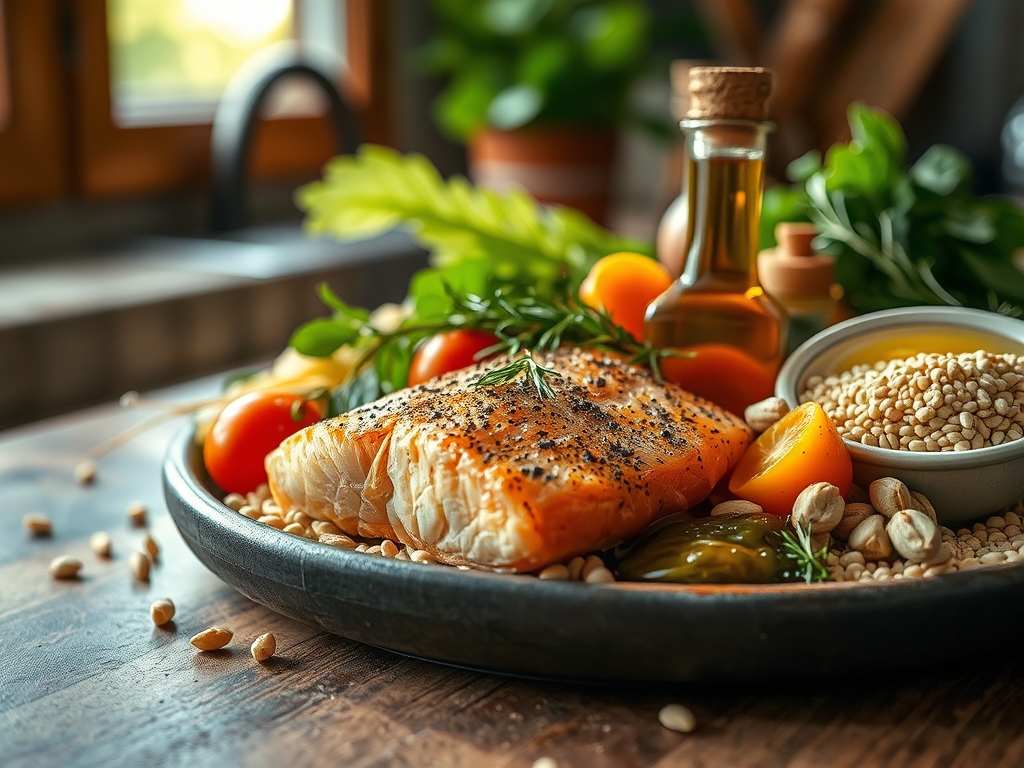
Before we ignite the burners, we must assemble our laboratory. For a world-class salmon roast, your mise-en-place is non-negotiable. You will need a high-quality side of King or Atlantic salmon, weighing approximately three to four pounds. Look for deep pigmentation and firm flesh that bounces back when pressed; this indicates a high density of astaxanthin and healthy lipid stores.
Your secondary ingredients should provide a spectrum of textures and pH levels. Gather unfiltered honey or maple syrup for viscosity; freshly harvested dill, parsley, and chives for chlorophyll-bright top notes; and Maldon sea salt for that essential crystalline crunch. You will also need unsalted European-style butter, which has a lower water content and higher fat percentage than standard varieties, allowing for a more stable emulsion in your sauces.
Smart Substitutions:
If you are catering to a crowd with specific needs, the science remains the same. Swap honey for agave nectar to achieve a similar glycemic index and browning rate. If dairy is off the table, use a high-smoke-point avocado oil or a cultured vegan butter to mimic the richness of animal fats. For those avoiding nuts in the crust, toasted panko breadcrumbs or crushed hemp hearts provide that necessary textural contrast without the allergen risk. Use a microplane to zest your citrus; this ensures you only capture the aromatic oils in the flavedo without the bitter pith.
The Clock
Efficiency in a holiday kitchen is about Chef's Flow. This is the art of overlapping tasks to maximize output without increasing stress. Total preparation time for these roasts is roughly 25 minutes, while the active cooking time ranges from 18 to 22 minutes depending on the thickness of the fillet.
The "Flow" dictates that you prepare your glazes and herb pastes first. This allows the flavors to infuse and the dry ingredients to hydrate. While the oven preheats to a precise 425 degrees Fahrenheit, your salmon should sit at room temperature for 15 minutes. This reduces the thermal shock to the proteins, ensuring the exterior does not overcook before the interior reaches its target temperature. Total time from fridge to table is approximately 50 minutes.
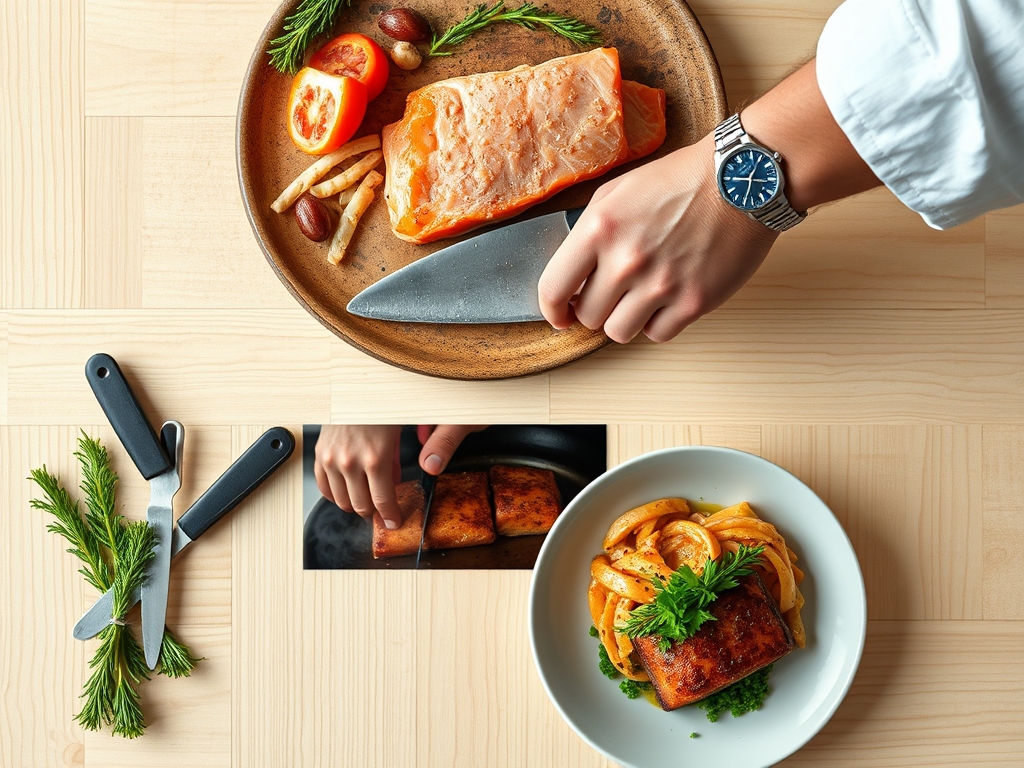
The Masterclass
1. Tempering and Surface Prep
Remove the salmon from its packaging and pat it dry with lint-free paper towels. Moisture is the enemy of the Maillard reaction. Use a bench scraper to ensure the skin is free of any residual scales or moisture.
Pro Tip: Drying the skin thoroughly allows the heat to immediately begin rendering the subcutaneous fat rather than wasting energy evaporating surface water. This results in a crispier texture.
2. The Seasoning Layer
Apply a generous coating of kosher salt and freshly cracked black pepper. If you are using a dry rub, apply it now, pressing it firmly into the flesh to ensure adhesion.
Pro Tip: Salt acts as a denaturant, breaking down the tightly wound protein coils on the surface. This creates a "tacky" exterior that helps glazes and crusts stick during the roasting process.
3. Searing for Structure
Place a heavy-bottomed skillet or a large roasting pan over medium-high heat. Add a thin layer of oil. Once the oil begins to shimmer, place the salmon skin-side down.
Pro Tip: This initial sear initiates enzymatic browning. By crisping the skin first, you create a thermal shield that protects the delicate flesh from the direct, aggressive heat of the pan.
4. Glazing and Infusing
Brush your chosen glaze (perhaps a balsamic-fig or a citrus-miso blend) over the top of the fish. Use a saucier to keep your glaze warm and viscous before application.
Pro Tip: Sugars in the glaze will undergo caramelization at approximately 320 degrees Fahrenheit. Applying the glaze halfway through the cook prevents the sugars from burning while still allowing them to develop deep, complex flavors.
5. The Precision Roast
Transfer the pan to the oven. Use a digital scale to weigh your aromatics if you are making a compound butter to finish. Monitor the internal temperature closely using a probe thermometer.
Pro Tip: Aim for an internal temperature of 125 degrees Fahrenheit. Thermal carryover will cause the temperature to rise another 5 degrees once the fish is removed from the heat, landing it at a perfect medium.
6. The Rest and Finish
Transfer the salmon to a warmed platter using wide tongs or a fish spatula. Let it rest for at least five minutes. Finish with a flurry of fresh herbs and a squeeze of charred lemon.
Pro Tip: Resting allows the muscle fibers to relax and reabsorb the juices. If you cut into the fish immediately, the internal pressure will force the moisture out, leaving you with a dry roast.
The Deep Dive
From a nutritional standpoint, salmon is a powerhouse. It is exceptionally high in Omega-3 fatty acids, specifically EPA and DHA, which are vital for heart health. A standard 6-ounce serving provides roughly 35 grams of high-quality protein and a significant dose of Vitamin B12 and Selenium.
Dietary Swaps:
For a Keto-friendly version, eliminate honey-based glazes and opt for a lemon-garlic butter sauce with crushed walnuts. For Vegan guests, this same roasting technique works beautifully with a large "steak" of cauliflower or a block of firm tofu, though cooking times will vary.
The Fix-It:
- The Albumin Leak: If you see white "goop" on the salmon, you have cooked it too fast. The muscle fibers contracted and squeezed out the protein. The Fix: Lower your oven temperature next time and pull the fish 5 degrees earlier.
- Soggy Skin: This happens if the pan wasn't hot enough. The Fix: Carefully peel the skin off, return it to a hot skillet with a weight on top until crisp, and serve it as a "cracker" on the side.
- Broken Glaze: If your glaze separates, it lacked an emulsifier. The Fix: Whisk in a teaspoon of Dijon mustard or a cold cube of butter to bring the fats and liquids back together.
Meal Prep and Reheating:
Salmon is best fresh, but if you have leftovers, avoid the microwave. The high-frequency waves agitate water molecules too violently, toughening the protein. Instead, reheat in a 275-degree oven covered with foil to retain moisture, or serve it cold in a sophisticated flaked salad the next day.
The Wrap-Up
Mastering salmon recipes for christmas dinner is about more than just following a list of steps; it is about understanding the chemistry of heat and the architecture of flavor. By focusing on surface moisture, temperature control, and the science of the rest, you transform a simple fillet into a legendary holiday centerpiece. Your guests will marvel at the succulent texture and the professional-grade crust. Now, grab your microplane and your favorite apron; it is time to create some holiday magic.
The Kitchen Table
How do I prevent salmon from sticking to the pan?
Ensure the pan is properly preheated and the oil is shimmering. Use a thin-bladed fish spatula to gently test the edges; the fish will naturally "release" from the surface once the skin has sufficiently crisped and dehydrated.
Can I cook a whole side of salmon from frozen?
It is not recommended for a holiday roast. Uneven thawing during the cook leads to a mushy exterior and a raw center. Always thaw your salmon in the refrigerator for 24 hours to maintain the cellular structure of the flesh.
What is the best way to remove pin bones?
Use dedicated fish tweezers to pull the bones out in the direction they are pointing. This prevents tearing the delicate muscle fibers. Always run your finger down the center line of the fillet to check for any missed bones.
How much salmon should I buy per person?
For a festive dinner, calculate roughly 6 to 8 ounces per adult. This accounts for the richness of the fish and ensures everyone leaves the table satisfied while allowing for a few prized leftovers for the next morning's brunch.