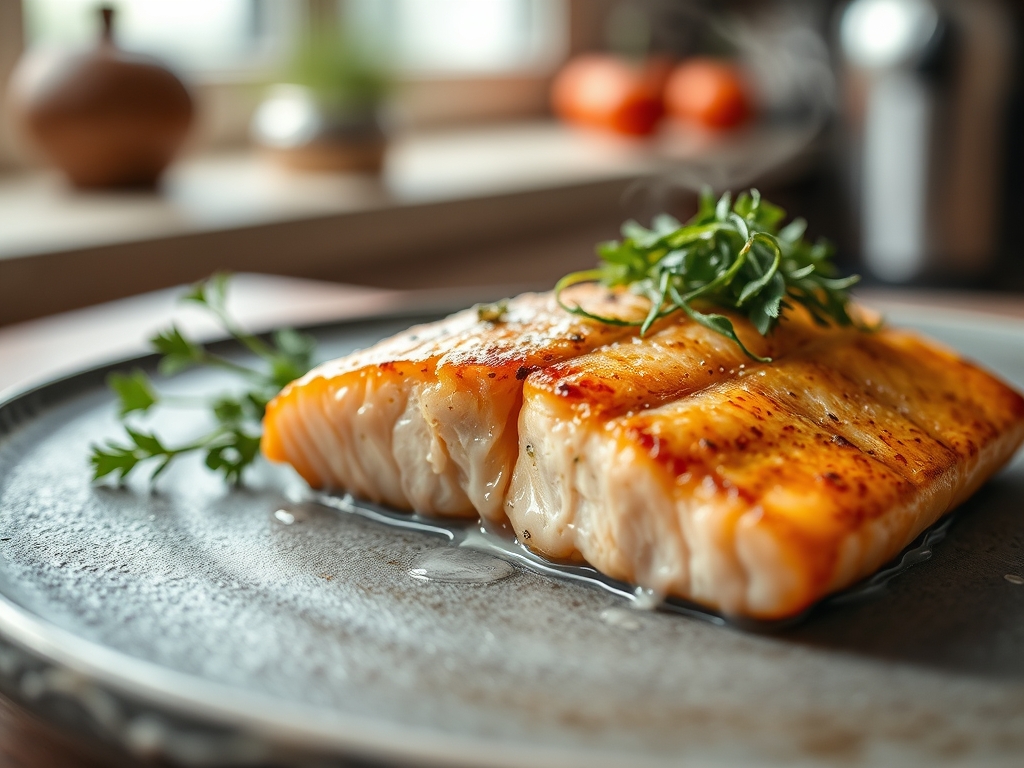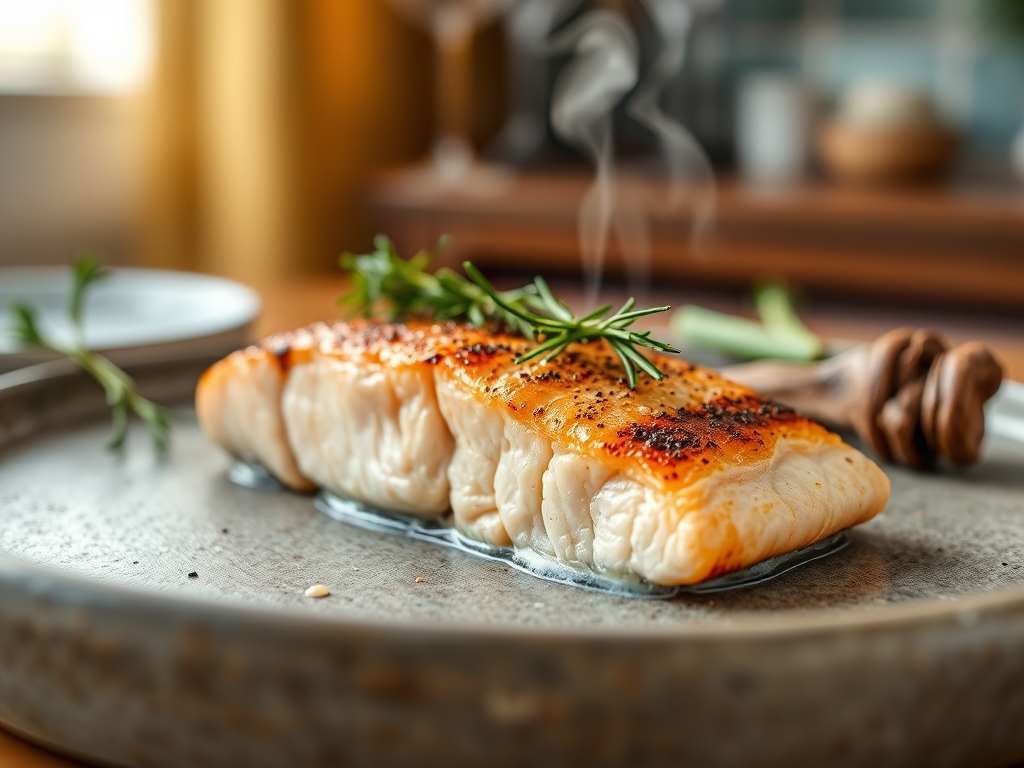
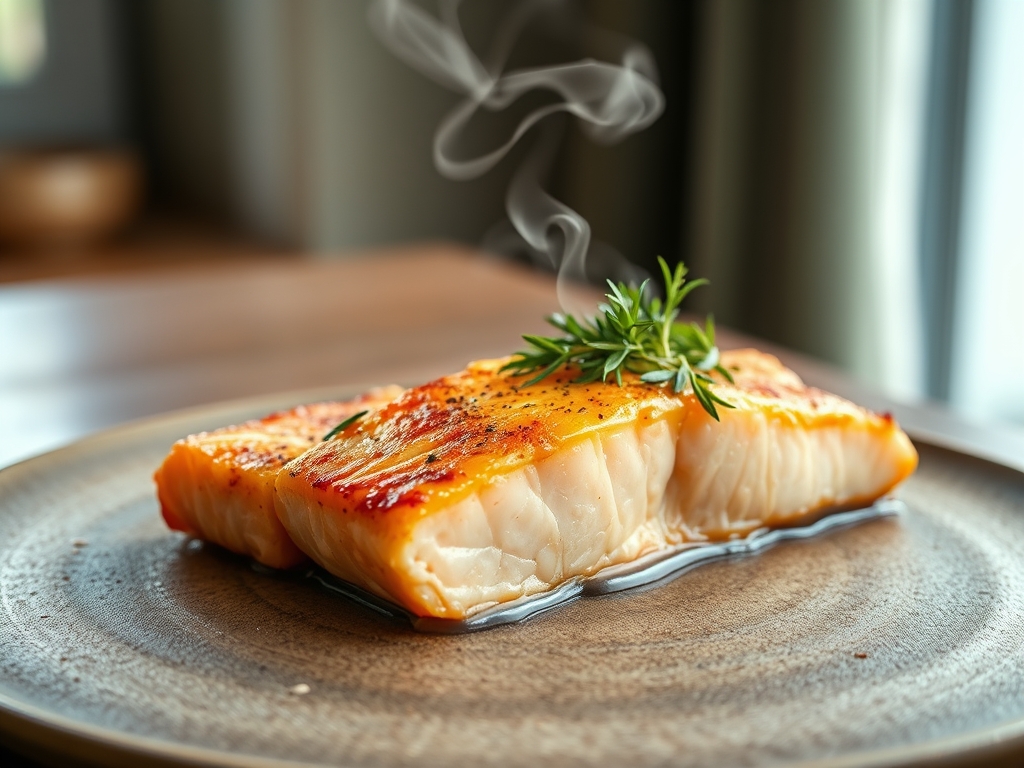
Picture a chilled bottle of Sancerre sweating on the marble counter while the scent of fresh dill and sizzling butter fills the air. Hosting does not have to be a frantic mess of timers and flour-dusted aprons. When you master elegant salmon recipes, you transform a simple weeknight protein into a high-fashion centerpiece that commands the room.
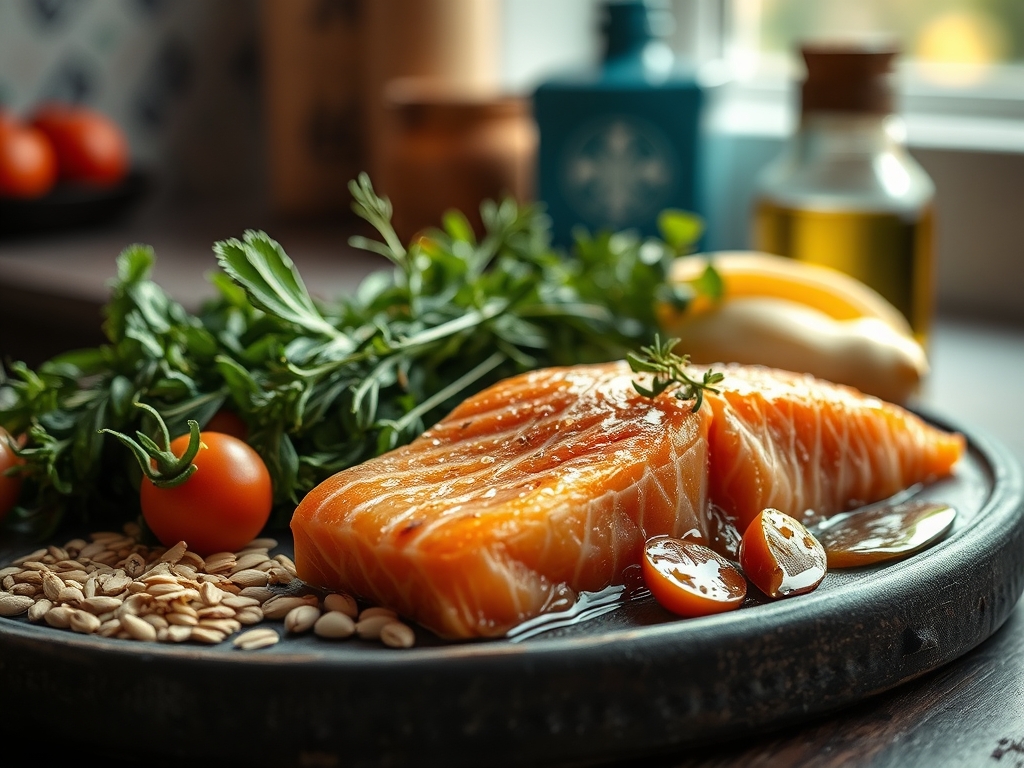
The Gathers:
Before we touch the heat, we must respect the mise-en-place. For these elegant salmon recipes, we are looking for sashimi-grade fillets with high intramuscular fat. Look for the white lines of marbling; this is the connective tissue and fat that will render into a buttery texture. You will need a heavy-bottomed skillet, preferably cast iron or stainless steel, to ensure even heat distribution and prevent the dreaded "hot spots" that lead to uneven cooking.
Your ingredient list should include high-smoke-point fats like avocado oil or clarified butter. We avoid extra virgin olive oil for the initial sear because its low smoke point causes it to break down and turn bitter at high temperatures. Gather fresh aromatics: sprigs of thyme, garlic cloves with the skins on to prevent burning, and lemons that feel heavy for their size. A heavy lemon indicates a thin pith and high juice volume.
Smart Substitutions: If you cannot find King Salmon, look for Steelhead Trout. It offers a similar fatty profile and vibrant orange hue but is often more accessible. For a dairy-free emulsification, swap the finishing butter for a high-quality cashew cream or a dollop of tahini to maintain that viscous mouthfeel without the lactose.
The Clock: Mastering the Chef's Flow
Timing is the difference between a silky masterpiece and a dry, chalky disappointment. Total active prep time for these elegant salmon recipes is a mere 15 minutes. The "Chef's Flow" relies on the principle of tempering. You must pull your fish from the refrigerator 20 minutes before cooking. If the center of the fish is ice-cold when it hits the pan, the exterior will overcook before the interior reaches the safe zone of 125 degrees Fahrenheit.
The cooking process itself is a lightning-fast 8 to 10 minutes. However, the most overlooked phase is the five-minute rest. During this time, thermal carryover continues to cook the fish even after it leaves the pan. We plan for this by pulling the fish off the heat when it is roughly 5 degrees below our target temperature.
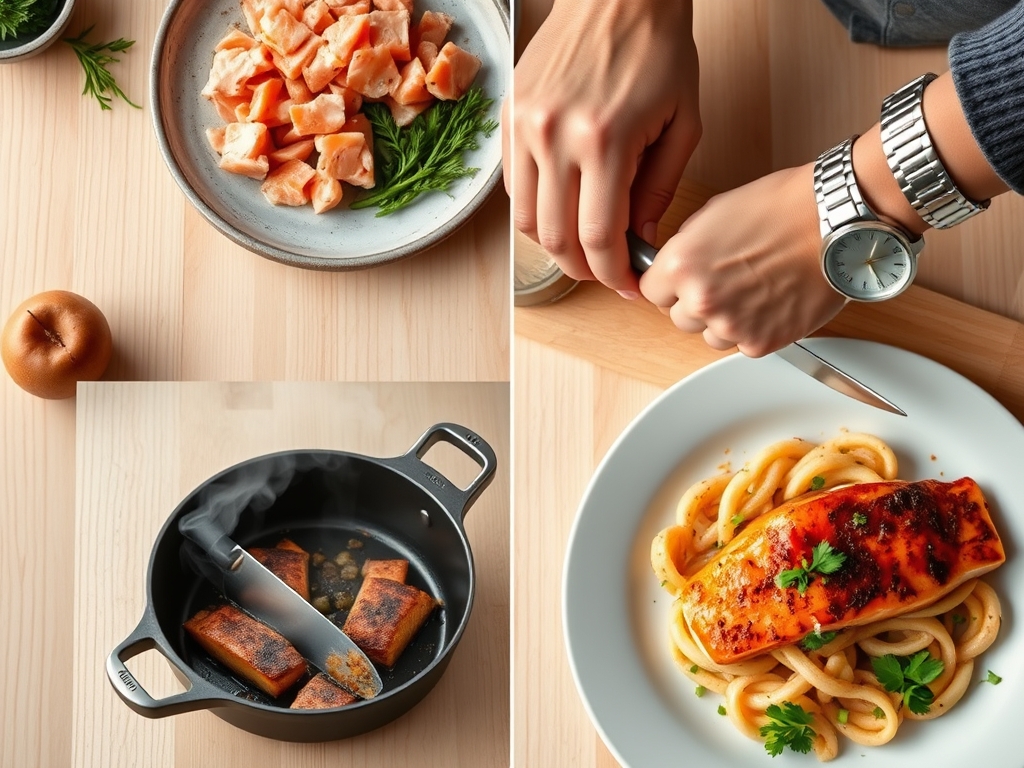
The Masterclass
1. The Desiccation Ritual
Use a paper towel to pat the skin bone-dry. Moisture is the enemy of the Maillard reaction. If there is any residual water on the surface, the fish will steam rather than sear. Use a bench scraper to gently remove any excess moisture from your cutting board before seasoning.
Pro Tip: This is about evaporative cooling. If the surface is wet, the energy from the pan goes into boiling the water rather than browning the proteins. Dry skin equals a glass-like crunch.
2. The Cold-Pan Start or High-Heat Sear
For ultra-crispy skin, place the salmon skin-side down in a cold heavy-bottomed skillet and then turn the heat to medium-high. This allows the fat to render slowly, preventing the skin from shrinking too quickly and curling.
Pro Tip: This technique manages protein denaturation. Slow heating prevents the muscle fibers from contracting violently, which keeps the fillet flat and ensures maximum surface contact with the heat source.
3. The Weight of Perfection
Once the fish is in the pan, use a flexible fish spatula or a digital scale weight to press down on the fillet for the first 30 seconds. This prevents the "cupping" effect where the edges curl up and the center loses contact with the pan.
Pro Tip: Constant contact ensures even conductive heat transfer. Without pressure, you get a "bullseye" cook where only the edges are crispy and the center is flabby.
4. The Aromatic Baste
Once you flip the fish, drop a knob of butter, crushed garlic, and thyme into the pan. Use a large spoon to infuse the bubbling butter over the skin. This is called arrosier.
Pro Tip: Butter contains milk solids that undergo enzymatic browning. By basting, you are adding a nutty, toasted flavor profile while the fat acts as an insulator to keep the flesh moist.
5. The Deglaze and Emulsify
Remove the fish and immediately deglaze the pan with a splash of dry white wine or verjus. Use your spatula to scrape up the fond, those brown bits stuck to the bottom. Whisk in cold butter to create a viscous pan sauce.
Pro Tip: This creates a temporary emulsion. The acidity in the wine breaks down the fats, creating a sauce that coats the tongue without feeling greasy.
6. The Microplane Finish
Plate the salmon and use a microplane to grate fresh lemon zest and frozen horseradish over the top. The frozen horseradish provides a piquant kick that cuts through the richness of the fat.
Pro Tip: Zesting at the very last second preserves the volatile oils in the citrus peel. These oils evaporate quickly; grating them directly over the plate ensures the aroma hits the guest's nose immediately.
The Deep Dive
When we look at the macro nutrition, salmon is a powerhouse of Omega-3 fatty acids and high-quality protein. A standard 6-ounce portion provides roughly 34 grams of protein and 20 grams of healthy fats. For those following a Keto lifestyle, this dish is a goldmine. To make it Vegan, you can apply these same searing techniques to "steaks" of King Oyster mushrooms or thick slabs of celery root, though the fat rendering science will differ.
The Fix-It: Common Pitfalls
- The White Gunk: If you see white "beads" (albumin) popping out of the fish, you have cooked it too fast or too high. Fix: Lower the heat and pull the fish earlier next time. It is safe to eat, just less aesthetic.
- Sticking to the Pan: You tried to flip it too soon. Fix: Wait for protein release. When the crust is formed, the fish will naturally detach from the metal.
- Soggy Skin: You covered the fish with a lid or sauce. Fix: Never pour sauce over the skin; pour it around the base of the fish to preserve the crunch.
Meal Prep and Reheating: To maintain "day-one" quality, do not use a microwave. The microwave agitates water molecules, which toughens the delicate protein structures. Instead, reheat the salmon in a 275-degree oven with a splash of water covered in foil to create a gentle steam chamber.
The Wrap-Up
Elegant salmon recipes are less about complex ingredients and more about respecting the laws of thermodynamics. By focusing on moisture control, fat rendering, and the final aromatic infusion, you elevate a simple fillet into a culinary event. Grab your tongs, trust your digital thermometer, and remember that the best host is the one who understands the science behind the sizzle.
The Kitchen Table
How do I stop salmon from smelling "fishy"?
Always buy translucent, firm fillets and rinse them under cold water, then pat dry. The "fishy" smell comes from trimethylamine, which develops as the fish ages. Freshness and proper desiccation are your best defenses against unwanted odors.
What is the best internal temperature for salmon?
For a buttery, medium-rare texture, aim for an internal temperature of 125 degrees Fahrenheit. Remember to account for thermal carryover, which will raise the temperature by about 5 degrees while the fish rests on the plate.
Can I use frozen salmon for elegant recipes?
Yes, if it is flash-frozen at sea. Thaw it slowly in the refrigerator overnight. Avoid quick-thawing in warm water, as this damages the cellular structure and leads to a mushy, lackluster texture when seared.
Why is my salmon skin not getting crispy?
The most common culprit is residual surface moisture. Use a bench scraper to squeegee the skin before seasoning. Additionally, ensure your pan is sufficiently hot before adding the fish to trigger an immediate Maillard reaction.