Imagine the scent of toasted peppercorns and aromatic cloves drifting through your kitchen as a heavy-bottomed pot hums on the stove. This is the ultimate sensory invitation to spring. Whether you are a traditionalist or a culinary rebel; mastering corned beef recipes for st patrick's day is about more than just boiling meat; it is a lesson in patience and chemistry. We are going to transform a humble salt-cured brisket into a masterpiece of tender fibers and silky fat.
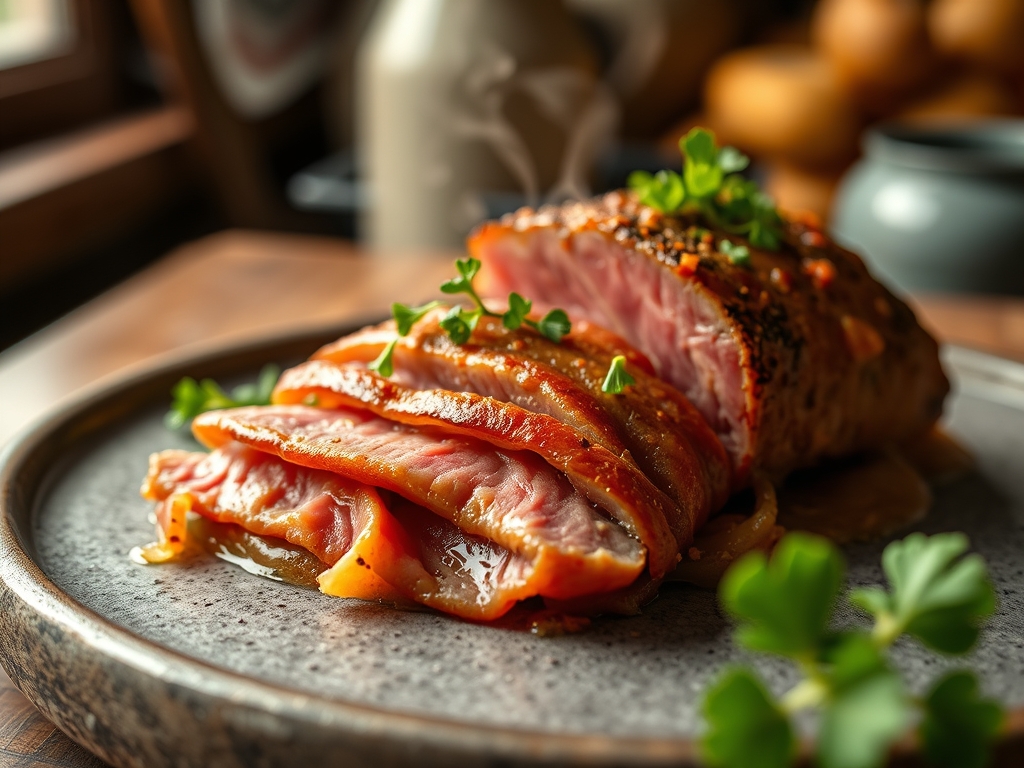
Forget the grey; rubbery slabs of your childhood. We are aiming for a mahogany crust and a center that yields to the mere suggestion of a fork. The secret lies in the balance of salt; acid; and heat. As your "smart; witty" kitchen confidante; I am here to tell you that the difference between a good meal and a legendary feast is all in the details. We are going to talk about osmosis; collagen denaturation; and why your choice of beer matters more than you think. Grab your apron and your favorite chef's knife; because we are about to turn your kitchen into a high-end gastropub.
The Gathers:
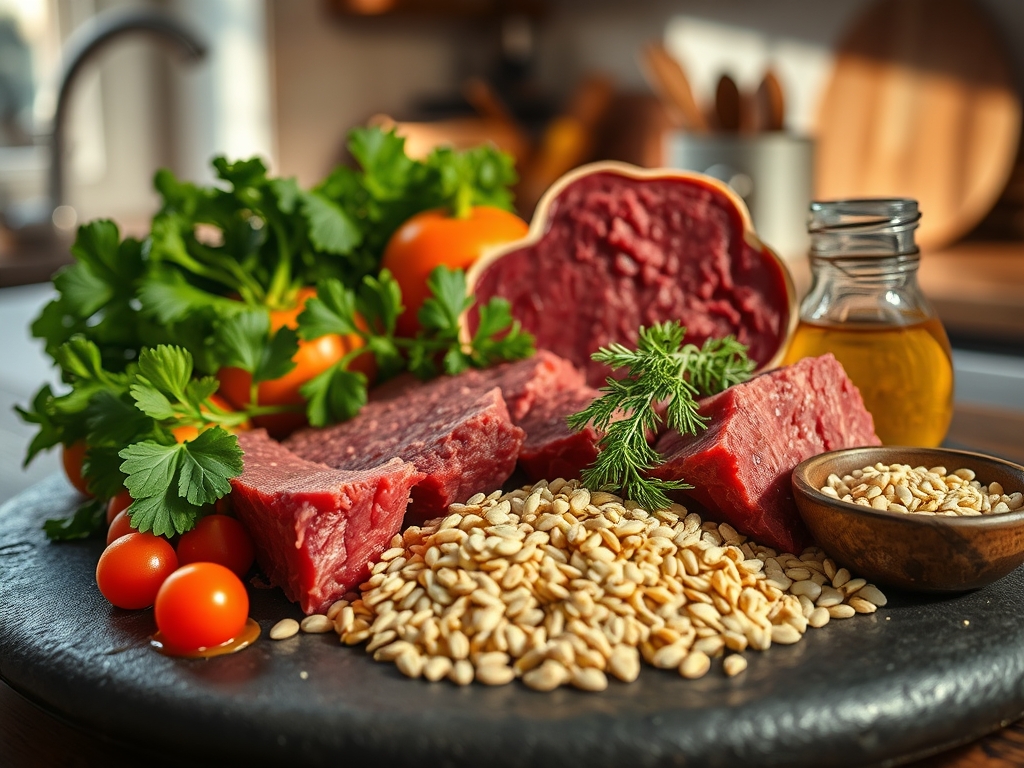
To achieve culinary greatness; your mise-en-place must be precise. Start with a high-quality corned beef brisket; preferably the "point cut" for its higher fat content which ensures a viscous; luxurious mouthfeel. You will need a saucier for your glaze and a digital scale to measure your aromatics.
Gather your aromatics: whole black peppercorns; mustard seeds; coriander; and bay leaves. These are not just for flavor; they infuse the cooking liquid with essential oils that penetrate the meat fibers. For the liquid base; choose a stout with low bitterness to avoid an astringent aftertaste after the long reduction.
Smart Substitutions:
If you are avoiding alcohol; replace the stout with a high-quality beef bone broth mixed with a tablespoon of blackstrap molasses to mimic that deep; malty profile. Instead of the standard cabbage; try using savoy cabbage or even Brussels sprouts. They have a tighter leaf structure that holds up better during the braising process. If you lack a traditional spice packet; use a microplane to zest fresh ginger and horseradish into the pot for a piquant kick that cuts through the richness of the beef.
The Clock
Efficiency in the kitchen is about the Chef's Flow. Total active time is roughly 45 minutes; but the "passive" time is where the magic happens.
- The Prep (20 Minutes): Trimming the fat cap to exactly one-quarter inch and toasting your dry spices in a dry heavy-bottomed skillet to release volatile oils.
- The Simmer (3 to 4 Hours): This is the thermal breakdown phase. You cannot rush the conversion of tough connective tissue into gelatin.
- The Glaze and Crisp (15 Minutes): A final blast of high heat to trigger the Maillard reaction on the surface.
- The Rest (20 Minutes): Critical for moisture retention. If you cut it too soon; the internal pressure will push all those delicious juices onto your bench scraper.
The Masterclass
1. The Desalination Soak
Place your brisket in a large bowl of cold water for at least an hour before cooking. This process uses simple diffusion to draw out excess surface brine; preventing the final dish from being an oversalted disaster.
Pro Tip: This step ensures that as the liquid reduces; the salt concentration stays balanced rather than becoming overwhelming.
2. The Spice Toast
Before adding your spices to the water; toss them in a dry pan until they become fragrant. This pyrolysis of the spice compounds creates deeper; more complex flavor notes that raw spices simply cannot provide.
Pro Tip: Use a mortar and pestle to slightly crack the peppercorns; increasing the surface area for maximum infusion.
3. The Low and Slow Braise
Submerge the meat in your flavored liquid and bring it to a bare simmer; never a rolling boil. High heat causes muscle fibers to contract violently; squeezing out moisture and leaving the meat "stringy."
Pro Tip: Maintaining a temperature of roughly 190 degrees Fahrenheit allows collagen to melt into gelatin without toughening the proteins.
4. The Aromatics Addition
Add your root vegetables; like carrots and parsnips; only in the final 45 minutes. This prevents them from turning into a flavorless mush and allows them to absorb the rendered fat from the brisket.
Pro Tip: Cutting vegetables into uniform sizes ensures they cook at the same rate; a concept known as thermal equilibrium.
5. The Glaze Application
Remove the meat and brush it with a mixture of honey; Guinness; and grain mustard. Place it under a broiler or in a high-heat oven until the sugars bubble and darken.
Pro Tip: This is the Maillard reaction in action; creating hundreds of new flavor compounds through the interaction of amino acids and reducing sugars.
6. The Carryover Rest
Transfer the brisket to a cutting board and tent it loosely with foil. Let it sit for at least 20 minutes before using your sharpest carving knife.
Pro Tip: This allows for thermal carryover; where the internal temperature rises slightly while the muscle fibers relax and reabsorb the juices.
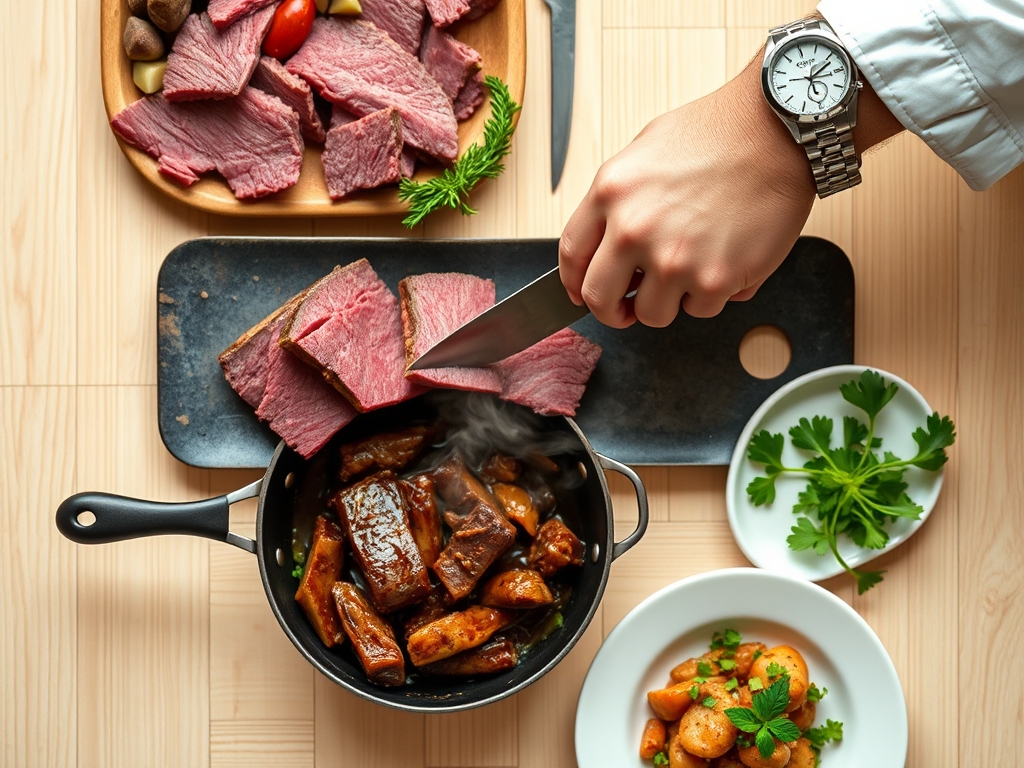
7. The Cross-Grain Carve
Identify the direction of the muscle fibers and slice perpendicular to them. This shortens the fibers; making every bite melt-in-your-mouth tender.
Pro Tip: Using a bench scraper to transfer slices helps maintain the structural integrity of the tender meat.
8. The Sauce Emulsification
Take a cup of the cooking liquid and whisk in a cold pat of butter in your saucier. This creates a temporary emulsion that is rich; glossy; and perfect for drizzling.
Pro Tip: The proteins in the butter act as stabilizers; binding the water and fat into a smooth sauce.
The Deep Dive
Macro Nutrition: Corned beef is a powerhouse of protein and B vitamins; though it is high in sodium. To balance the plate; focus on fiber-rich cruciferous vegetables.
Dietary Swaps:
- Keto: Replace the honey in the glaze with a brown sugar substitute and skip the potatoes in favor of radishes; which lose their peppery bite and mimic potatoes when boiled.
- Vegan: Use a large "steak" of head cabbage or a brined seitan loaf. Use liquid smoke and beet juice to mimic the color and cured flavor profile.
- GF: Ensure your stout is a gluten-free variety or stick to a wine-based braise.
The Fix-It:
- Tough Meat: It hasn't cooked long enough. Put it back in. The collagen hasn't fully broken down yet.
- Too Salty: Add a peeled potato to the liquid; it acts as a sponge. Alternatively; serve with an unseasoned; creamy starch like polenta.
- Dry Meat: You likely boiled it too hard. Slice it thin and serve it submerged in the warm emulsified sauce to rehydrate the fibers.
Meal Prep & Reheating: To maintain "day-one" quality; reheat slices in a shallow pan with a splash of the leftover cooking liquid. Cover with a lid to create a steam chamber; preventing the meat from oxidizing and becoming "warmed-over" in flavor.
The Wrap-Up
You are now armed with the scientific secrets to the perfect festive feast. From the osmotic soak to the final Maillard crust; your corned beef will be the talk of the town. Remember; cooking is just delicious chemistry; and you are the lead scientist. Don't be afraid to experiment with your aromatics or your glaze; as long as you respect the "low and slow" rule; you cannot go wrong. Now; go grab those tongs and get started!
The Kitchen Table
How do I make my corned beef less salty?
Soak the raw brisket in cold water for two hours before cooking. This uses diffusion to pull excess salt from the exterior. If the finished dish is still too salty; serve it with an acidic side like pickled onions.
Why is my corned beef always tough?
Toughness usually means the meat was boiled too fast or not long enough. Low heat is required to melt collagen. Ensure you maintain a gentle simmer and test for "fork-tenderness" before removing from the heat.
Can I cook corned beef in a slow cooker?
Yes; the slow cooker is excellent for maintaining the consistent low temperature needed for protein denaturation. Cook on "low" for 8 to 10 hours to ensure the fat has plenty of time to fully render.
What is the best way to slice corned beef?
Always slice against the grain. Look for the long lines of muscle fiber and cut perpendicular to them. This breaks the fibers into short pieces; making the meat much easier to chew and giving it a better texture.